


The digital marketing environment is very competitive, and it requires the application of SEO tools that enable optimization of the rank of websites, improve organic traffic, and ensure a high position of search results. The top 10 SEO tools featured are the most popular among marketers, content creators, web developers, and SEO professionals in the context of simplifying keyword research, website audits, backlink dissection, and optimization of the content. Among the factors that make the tools significant are the fact that they are informative, may be useful in addressing time-wasting scenarios, and allow making decisions based on facts.
The choice is made on various criteria such as data accuracy, facility depth, usability, scalability, integration, and general cost-effectiveness. As a freelancer, managing your own blog, designing a site and optimizing its structure, or a marketing department working to execute an enterprise SEO project, these tools provide the accuracy and effectiveness to attain higher rankings and increased performance in all search engines.
Also read: Off-Page SEO Tools
Criteria for Selecting the Best SEO Tools
The criteria for selecting the best SEO tools are the following:
- Comprehensive feature set: It should consist of such SEO activities as required: keyword research, backlink analysis, site auditing, rank tracking, and content optimization.
- Data accuracy and freshness: Accurate and frequently updated data ensures that all the trends regarding keywords, the backlink profile as well as the SERP positions are reflective of reality, which is crucial in the context of strategy.
- Ease of use and interface: It must be a tool with a simple user interface and easy navigation, particularly for non-highly technical marketers and beginners.
- Integration capabilities: It must be easy to combine with services such as Google Analytics, Google Search Console, and common CMS or CRM tools.
- Scalability and flexibility: It has to fit your needs at this very moment, and it has to grow with you and your team or your project, be it a single blogger or a massive SEO agency.
- Reporting and insights: Seek features like report customization, actionable recommendations, and data-sharing capabilities that allow you to send data to clients or team members without much effort.
- Support and learning resources: The presence of good customer support, tutorials, webinars, and community forums will guarantee that people using the tool will have the best experience with the tool, especially, during the learning phase.
- Pricing and value for money: The pricing should match the features offered. Examine your budget and compare it with what the tool’s capabilities will provide to you.
- Specialization (if applicable): The tool is not universal (e.g. some tools are focused on handling technical audits, content optimization, local SEO), so make sure that the tool corresponds to your priorities.
- User reviews and reputation: Reviews and reputation in the industry will give a person an idea of the consistency of the tool and its effectiveness and the general satisfaction of the people using it.
List of Top 10 SEO Tools
Here is a detailed breakdown for each of the top 10 SEO tools:
1. Ahrefs
Ahrefs is one of the most popular SEO tools that help professionals check backlinks, find keywords, conduct an audit of websites, and spy on competitors. Its Site Explorer provides in-depth information about the traffic and link profile of any site, and its Keywords Explorer allows finding high-opportunity keywords. Ahrefs can do extensive site audits to identify technical SEO problems with a powerful web crawler.
One of its kind is the huge backlink database it is known to have in the industry. It is perfect for power users and assists with content strategy design and competitor research. Ahrefs is highly regarded by digital marketers, agencies, and SEO professionals to get detailed data and insights that can be acted upon.
Key Features:
- Site Explorer for backlink and traffic analysis
- Keywords Explorer with global data
- Site Audit for technical SEO issues
- Content Explorer for topic discovery
- Rank Tracker for position monitoring
Pros:
- Industry-leading backlink index
- Great for competitive analysis
Cons:
- Steep learning curve for beginners
- Premium pricing
Pricing:
Starts at $129/month
Who should use it?
SEO professionals, digital marketing agencies, and content strategists.
2. SEMrush
SEMrush is a comprehensive digital marketing toolkit that incorporates comprehensive SEO, PPC, content marketing, and competitor analysis capabilities. Its strong features comprise a keyword tracker, a backlink audit tool, a site health check, and content optimization ideas. Users are able to compare domains, paid advertising analysis, and identify loopholes in the competitor’s SEO strategies.
The Keyword Magic Tool of SEMrush makes it easy to find relevant keywords, and the Position Tracking tool allows checking rankings in real time. Booth small businesses and large-scale enterprises, SEMrush is loved due to the ease of use and the quality of data presented. Marketers rely on it as a one-stop shop when they want to enhance visibility and the performance of their campaigns.
Key Features:
- Keyword Magic Tool
- Site Audit and Health Score
- Position Tracking
- Backlink Analytics
- Domain vs. Domain comparison
Pros:
- Extensive feature set for multiple marketing tasks
- Excellent competitor insights
Cons:
- Can be overwhelming for beginners
- Costly for small businesses
Pricing:
Starts at $139.95/month
Who should use it?
SEO teams, PPC marketers, and content creators managing multiple campaigns.
Suggested Blogs:
3. Google Search Console
Google Search Console is one of the free-of-charge SEO tools offered by Google to site owners to assist them in comprehending how their site is seen in search results and the way to optimize it. It will enable the user to track performance data including clicks, impressions, and keyword ranking. Webmasters may diagnose indexing problems, submit pages to be indexed, and get notifications whenever crawling encounters errors or mobile usability issues.
It also provides Core Web Vitals and security reports. It does not have competitor analysis and keyword discovery tools, but it is a vital platform to ensure technical SEO health. It is ideal for being used by site owners, developers, and SEO professionals who deal directly with Google in optimizing their websites.
Key Features:
- Performance report with clicks and impressions
- Index Coverage report
- URL inspection tool
- Mobile usability insights
- Core Web Vitals assessment
Pros:
- Completely free
- Directly from Google
Cons:
- Limited keyword data
- No competitor analysis
Pricing:
Free
Who should use it?
All website owners, especially beginners and technical SEO specialists.
4. Moz Pro
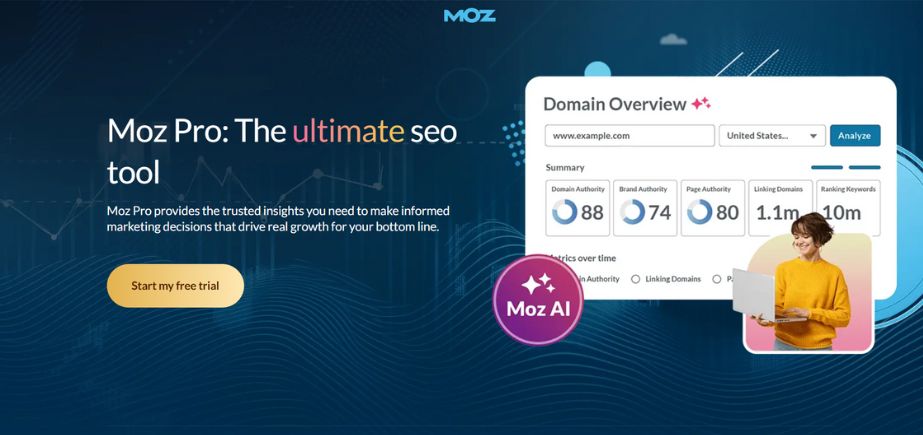
Moz Pro is the SEO software suite, which can be trusted to help in making the process of keyword tracking, link analysis, site auditing, and on-page optimization quite simple. Its Keyword Explorer assists users in finding and prioritizing terms by volume and difficulty, whereas the Site Crawl tool identifies technical problems that may influence ranks.
The Link Explorer tool by Moz offers all the backlink data one may need, whereas the Page Optimization tool gives realistic suggestions on content advancement. Moz Pro is especially new and user-friendly with a clean interface and solid educational resources. It is perfect for SMBs, marketing teams, or SEO freelancers who want to find the tools they can trust and rely on with good customer support and feature sets.
Key Features:
- Keyword Explorer
- Site Crawl diagnostics
- Link Explorer for backlinks
- Page Optimization recommendations
- Custom reports
Pros:
- Beginner-friendly interface
- Good support and learning resources
Cons:
- Smaller backlink database than Ahrefs
- Limited automation features
Pricing:
Starts at $49/month
Who should use it?
SMBs, content marketers, and entry-level SEO users.
Also Read: Online Tools
5. Ubersuggest
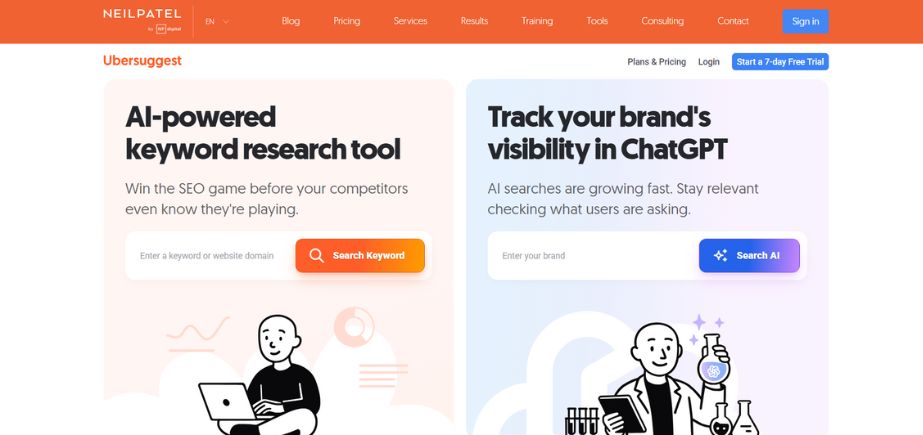
Ubersuggest is an affordable SEO tool created by Neil Patel that is useful to small businesses and novice users. It provides keyword suggestions, domain overview, backlinks monitoring, and content ideas in an easy-to-use, clean dashboard. Search volume, keyword difficulty, and competitive numbers are available in the tool to help with planning. Ubersuggest also has the functionality of site audit and rank tracking (basic).
Although it cannot compete with the functionality of high-end instruments such as Ahrefs or SEMrush, it encompasses all of the fundamental SEO requirements at a small percentage of the price. It is mostly geared towards bloggers, freelancers, and marketers who seek a pragmatic approach in commencing the process of optimizing their site content.
Key Features:
- Keyword ideas and traffic estimation
- SEO audit reports
- Content ideas and suggestions
- Backlink data
- Domain overview
Pros:
- Affordable for small businesses
- Simple and intuitive design
Cons:
- Limited advanced features
- Slower data updates
Pricing:
Free version available; Paid plans from $12/month
Who should use it?
Freelancers, bloggers, and small business owners new to SEO.
6. Screaming Frog SEO Spider
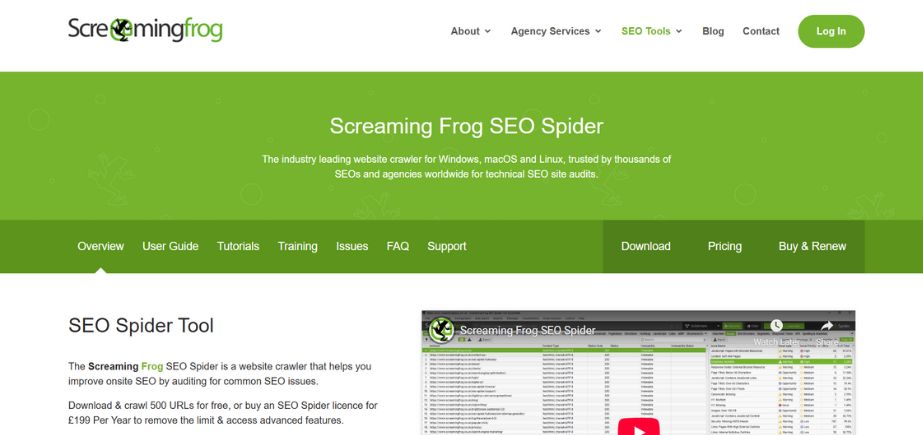
Screaming Frog SEO Spider is one of the technical SEO tools (desktop-based) utilized in deep crawling and auditing websites. It crawls the websites to find broken links, duplicate content, redirect chains, missing metadata, and other on-page problems. It is also compatible with JavaScript rendering, XML sitemaps, and connection with Google Analytics and Search Console. It is not cloud-based but it is fast and precise; this is why SEO professionals and developers love it.
Its crawler can crawl up to 500 URLs in the free version and advanced options are available with the premium license. This is the perfect tool when you are a technical SEO who requires extensive site control and crawl diagnostics.
Key Features:
- Crawl websites for SEO audits
- Exportable audit data
- Visual site architecture
- Integration with Google Analytics & Search Console
- JavaScript rendering
Pros:
- Ideal for technical SEO audits
- Handles large sites effectively
Cons:
- Requires installation
- Interface can be complex
Pricing:
Free up to 500 URLs; Paid version $279/year
Who should use it?
Technical SEO specialists and website developers.
7. Yoast SEO
Yoast SEO is a widely-used WordPress plugin that is meant to assist in the optimization of content with regard to search engines. It gives a real-time report on the SEO factors, including title tags, meta descriptions, use of keywords, and readability. Yoast also creates XML sitemaps and adds schema markup to enhance indexing and rich snippets. It aids users in assuring good internal linking, and dealing with canonical URLs, and redirects.
The plugin would be best suited to bloggers, small business owners, and content producers who use WordPress. Although its free plan includes plenty of helpful features, its paid plan includes such extras as multiple keyword optimization and automatic redirects, making on-page SEO simple and available.
Key Features:
- Real-time content analysis
- Readability check
- Meta title and description editing
- Schema.org integration
- XML sitemap generation
Pros:
- Easy for WordPress users
- Useful on-page SEO feedback
Cons:
- Only works on WordPress
- Limited features in free version
Pricing:
Free; Premium starts at $99/year
Who should use it?
Bloggers, content creators, and WordPress site owners.
8. Surfer SEO
Surfer SEO is an SEO content optimizer tool that provides SERP-based data that helps in creating and enhancing SEO-optimized pages and blog posts. Its Content Editor suggests real-time recommendations on the number of keywords, word count, headings, and NLP terms of the top-ranking competitors. Users are able to perform audits on current pages and get practical recommendations on how to fix on-page performance.
Surfer is integrated with such tools as Jasper and Google Docs to facilitate writing processes. It does not manage technical SEO but is outstanding at content optimization to boost ranking. Content marketers, writers, and SEO strategists who aim at increasing organic visibility will find it excellent.
Key Features:
- Content Editor with NLP recommendations
- SERP Analyzer
- Audit tool for published content
- Keyword Surfer browser extension
- AI content generation
Pros:
- Great for content writing and SEO alignment
- Detailed SERP-based suggestions
Cons:
- Not ideal for technical SEO
- Requires external keyword research
Pricing:
Starts at $79/month
Who should use it?
Content marketers, copywriters, and SEO-focused blog editors.
9. KWFinder
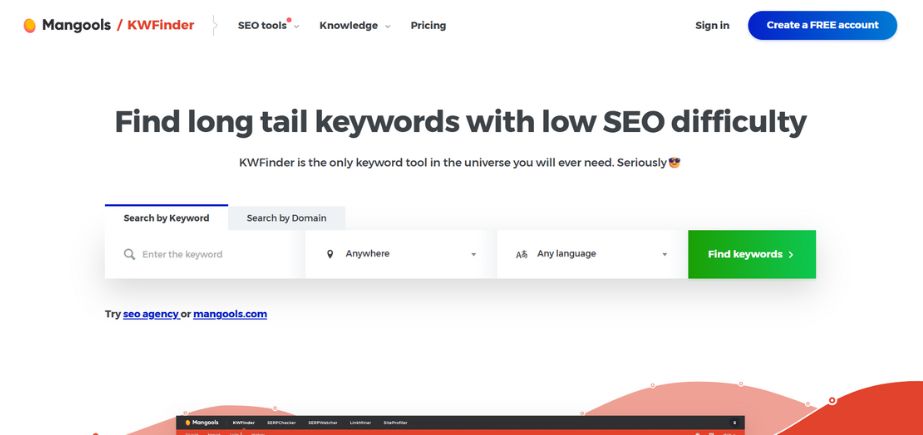
Mangools KWFinder is a keyword research tool that aids its users in locating long-tail keywords and low-competition keywords that have great potential. It displays KW difficulty scores, search volumes, and CPC in an easy-to-use, friendly interface. The users have access to SERP analysis, historical trends, and location-specific results in order to refine their keyword strategy.
KWFinder is especially handy when you are a blogger, an affiliate marketer, or an SEO newbie seeking easy-to-rank prospects. Although it is not a complete SEO suite, it is an effective research tool together with other tools of Mangools such as SERPChecker and LinkMiner. It strikes a balance between affordability and functionality.
Key Features:
- Long-tail keyword suggestions
- SEO difficulty score
- SERP analysis
- Localized keyword results
- Competitor keyword spying
Pros:
- Simple and beginner-friendly
- Excellent for long-tail keywords
Cons:
- Limited project management tools
- Smaller keyword database than larger competitors
Pricing:
Starts at $29/month
Who should use it?
Niche bloggers, affiliate marketers, and SEO beginners.
10. Google Analytics
Google Analytics is a complimentary analytics application that monitors website traffic, user activity as well as conversions, which are vital in providing data on the performance of SEO. It assists owners of sites to distinguish the origin of traffic, the way in which consumers engage with the content and the pages that trigger their interest the most.
Segmenting audiences and converting path analysis helps marketers improve their SEO approach to achieve improved results. Although it is not an SEO tool per se, it is a must-have in the measurement of the effects of SEO activities. It provides the full picture of organic performance together with such tools as Search Console. It is very popular among all types and sizes of businesses.
Key Features:
- Audience and traffic reports
- Goal and conversion tracking
- Referral and channel analysis
- Behavior flow visualization
- Custom dashboards and reports
Pros:
- Free with robust data insights
- Deep integration with Google services
Cons:
- Complex for beginners
- No direct SEO recommendations
Pricing:
Free
Who should use it?
All website owners, analysts, and SEO strategists looking to track SEO impact and user behavior.
Also Read: Route Optimization Software
Comparison Between the Top 10 SEO Tools
Here is a comparison table for the 10 best SEO optimization tools, covering key features, pricing, use cases, and official websites:
| SEO Tool | Key Features | Pricing (Starting) | Best For | Website |
| Ahrefs | Backlink analysis, keyword research, site audits, rank tracking | $129/month | Agencies, SEO professionals | ahrefs.com |
| SEMrush | Keyword tracking, content marketing, PPC, competitive analysis | $139.95/month | Digital marketers, enterprises | semrush.com |
| Google Search Console | Performance monitoring, indexing issues, mobile usability | Free | Webmasters, developers | search.google.com/search-console |
| Moz Pro | Keyword tracking, site audits, backlink analysis, on-page SEO | $49/month | SMBs, marketing teams | moz.com |
| Ubersuggest | Keyword suggestions, domain analysis, site audits | $12/month | Beginners, freelancers | neilpatel.com/ubersuggest |
| Screaming Frog SEO Spider | Technical SEO audits, broken links, redirects, metadata analysis | Free / $279/year | Technical SEOs, developers | screamingfrog.co.uk |
| Yoast SEO | On-page SEO, readability checks, meta tags, XML sitemaps | Free / $99/year | WordPress users, bloggers | yoast.com |
| Surfer SEO | Content optimization, SERP data, NLP terms, content editor | $79/month | Content marketers, SEO copywriters | surferseo.com |
| KWFinder | Long-tail keyword research, SEO difficulty, SERP analysis | $29/month | Niche bloggers, affiliate marketers | mangools.com/kwfinder |
| Google Analytics | Traffic tracking, user behavior analysis, goal conversions | Free | All website owners | analytics.google.com |
Conclusion
Hence, the most efficient SEO tools focus on various needs, including technical site audits, content optimization, and keyword tracking. To manage SEO in an all-encompassing sense, Ahrefs and SEMrush are worthy of attention since they have sturdy functions and data validity. Ubersuggest and KWFinder can be friendlier and cheaper for beginner users and small companies. It should be noted that Surfer SEO and Yoast SEO are suitable for content-oriented users, in particular on-page optimization and readability.
In the case of technical SEO, Screaming Frog is perfect when users require an in-depth analysis of the site at the developer level. The Google Search Console and Google Analytics are some of the critical free tools to monitor performance and user behavior. In the end, it all boils down to what you want to achieve, your level of expertise, and your available budget; a lone blogger, an in-house marketer, or an SEO firm. A multi-tool approach will usually be the most efficient way of doing things, as every nook and cranny of SEO will be covered.
FAQs
1. What do SEO tools do?
The SEO tools aid analysis, optimization, and enhancement of the visibility of a site on search engines. They help with keyword research, backlink monitoring, site audit, competitor analysis, and content optimization to boost organic traffic.
2. Do free SEO tools work?
Absolutely, useful information can be gained with the help of free tools such as Google Search Console, Google Analytics, and Ubersuggest. Nevertheless, they might be restricted in the depth of data and functions in comparison with paid instruments such as Ahrefs or SEMrush.
3. What is the best beginner SEO tool?
Such tools as Ubersuggest, Moz Pro, and KWFinder are the most beginner-friendly because of their convenient interface, low cost, and guided options that make SEO activity less complicated.
4. Is there a single SEO tool?
There is no tool that can deal with all the aspects of SEO flawlessly. Most practitioners combine several tools together (e.g., Ahrefs + backlinks, Surfer SEO + content, Screaming Frog + technical audit) to have everything in one place.
5. How frequently does one need to use the SEO tools?
It should be used regularly: at least once a week to monitor positions, site health and refresh keywords. Active content campaigns or competitive niches might require more frequent use.