

Chai has always been loved by Indians, and making money out of this has never been easier than now. As one of the largest tea franchises, the Amruttulya brand is recognised for its smooth, heavenly tea experiences at reasonable prices. If you are a future business person desiring to enter the food and beverage sector, then the knowledge of Yewale Amruttulya franchise cost becomes your first step toward success in brewing.
This detailed guide will dive into investment requirements, profitability margins, and assist you in making a choice about your very own Amruttulya outlet. With a whopping 27 million cups sold and franchise options beginning from just ₹5 lakhs, the cost of the Amruttulya franchise has come to be an easily accessible way into the fast-growing Indian tea culture.
Yewale Amruttulya Chai: Brand Overview
The name Amruttulya means “comparable to nectar,” which is a perfect description of the brand’s promise of providing heavenly teas. With a refinement of the traditional Indian tea culture, Amruttulya has become best known for its quality, hygiene, and uniformity in taste. The company runs a low-cost franchise model, so it is easy for aspiring entrepreneurs to set up their business by investing in a space of 100 to 150 square feet.
Yewale Amruttulya, with more than 550 outlets in 12+ states and no or very few royalty fees, provides full support to its franchisee partners in the areas of training, provision of standardised raw materials, and marketing assistance, thus emerging as one of the quickest growing chai franchises in India.
What Is an Amruttulya Franchise?
Overview
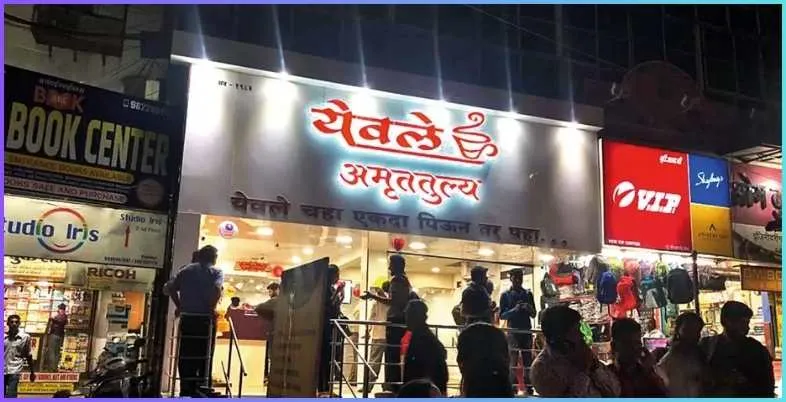
Yewale Amruttulya franchise is the ultimate food business opportunity in India’s large tea retail market. It’s a uniform model where the tea outlet can be operated by the entrepreneurs under a well-known name and get the advantages of the proven recipes, operational systems, and brand recognition. The Amruttulya franchise gives a professional chai shop the whole package, including the proprietary tea blends and equipment specifications, training programs, and marketing materials. Starting an independent tea business is a long and uncertain process, but an Amruttulya franchise gives you the opportunity to follow a tested and proven path to success, thus making it suitable for both first-time business owners and experienced entrepreneurs.
Types of Outlets/Models
Yewale Amruttulya franchises think about the different investment levels and involvement preferences, thus they provide flexible models like:
| Model / Outlet Type | Key Features | Best For |
|---|---|---|
| FOFO – Franchise Owned, Franchise Operated | Franchisee owns the outlet and manages daily operations (staffing, customer service, etc.). | Entrepreneurs who want full control and involvement in the business. |
| FOCO – Franchise Owned, Company Operated | Franchisee invests in the outlet while the company runs daily operations. | Investors seeking passive income with minimal time involvement. |
| Compact / Small Outlet (≈ ₹12 Lakh Investment) | Kiosk or small shop setup with limited space and seating; budget-friendly entry model. | Those starting with lower capital or wanting to test a market first. |
| Standard / Premium Outlet (Higher Investment) | Full store setup with seating, enhanced interiors, and branding; ideal for high-footfall markets. | Businesses are targeting higher sales volume and more substantial brand presence. |
Growth Potential and Market Demand
- Consistent Daily Demand: The consumption of tea 2-3 times a day by more than 80% of the Indian population guarantees the continuous flow of customers.
- Growing Market Size: The continuous growth of India’s tea market is a result of larger urban areas and the increase in the number of coffee drinkers.
- Recession-Proof Business: Even in the worst of times, tea continues to be an inexpensive luxury, which then, of course, stabilises the business.
- High Scalability: A successful franchisee can open more than one outlet in different territories, thus creating a portfolio of profitable businesses.
- Pan-India Expansion: The brand already has a presence in more than 12 states, which is an indication of the strong potential for replication in new markets.
- Youth Appeal: The modern branding and professional outlets entice the young demographic groups who are already customers of the traditional tea shop; thus, young consumers are targeted.
Yewale Amruttulya Franchise Cost & Investment Guide
In order to comprehend the Yewale Amruttulya franchise cost, it is necessary to break down the investment components involved. Moreover, the total investment differs according to the location, outlet size, and the specific Amruttulya brand variant selected.
Franchise Fee
Yewale Amruttulya’s initial franchise fee varies between ₹2,00,000 and ₹10,00,000 based on the chosen brand variant and model, among other factors. This fee allows operating under the Amruttulya trademark, using proprietary recipes, receiving complete training, and being part of the ongoing support.
Total Investment
| Cost Component | Estimated Amount / Range | Notes |
|---|---|---|
| Franchise Fee | ₹2,00,000 – ₹10,00,000 | Based on outlet type and location |
| Interior Setup & Furnishing | ₹5,00,000 – ₹15,00,000 | Includes seating, decor, fit-outs |
| Equipment & Machinery | ₹1,00,000 – ₹5,00,000 | Tea-making machines, storage, POS |
| Initial Raw Material | ₹50,000 – ₹2,00,000 | Tea ingredients, snacks, cups, packaging |
| Store Rent (Monthly) | ₹50,000 – ₹2,00,000 | Variable by city — higher in metros |
| Utilities (Monthly) | ₹10,000 – ₹30,000 | Electricity, water, Wi-Fi, etc. |
| Staff Salary (Monthly per employee) | ₹10,000 – ₹25,000 | 2–4 staff generally required |
| Marketing & Promotion | ₹20,000 – ₹1,00,000 | Branding, launch promotions |
| Licenses & Permits | ₹10,000 – ₹50,000 | FSSAI, GST, Trade License |
| Maintenance & Misc. | ₹5,000 – ₹20,000 | Repairs, replacements, extra expenses |
| Category | Estimated Total |
|---|---|
| Budget-level Outlet | ₹10,00,000 – ₹12,00,000 |
| Standard / Metro-City Outlet | ₹15,00,000 – ₹30,00,000 |
- The “entry level” (lower-cost) version of the Yewale Amruttulya franchise can start at ~₹ 10–12 Lakh.
- For better-located or larger outlets (or in metro cities), the complete setup tends to fall toward the ₹ 13 L – ₹ 17 L (or even ₹ 18 – 22 L) range depending on scale.
- The cost breakdown includes franchise fee, interior/fit-out, equipment, and initial raw-material stock.
Yewale Amruttulya Franchise Profitability & Revenue
When you take a closer look at the potential profits, the Yewale Amruttulya franchise fee does not look bad at all. The franchisees’ city areas can expect a gross profit margin of 50-65% and a net profit margin of 15-35% depending on the place, the effective and good sales volume. With a very low cost of raw materials for chai (tea, milk, spices), a huge return is generated per cup. Net profits of ₹60,000 to ₹1,20,000 are reported on average by franchisees per month, with even more coming from high-performing outlets in prime areas.
The average franchisee usually gets a monthly sales break-even point of ₹1 lakh, which means about 200 cups a day. The majority of franchisees get their money back between 6 and 18 months, making it one of the quickest return on investment opportunities in the food and drink sector. The factors that influence success are the selection of locations with high foot traffic and good quality control, offering excellent customer service, and effective cost management.
High-Demand Locations for Yewale Amruttulya
Best Areas in Delhi, Hyderabad, and Maharashtra for Franchise Outlets
Delhi NCR:
- Areas of metro stations (Connaught Place, Rajiv Chowk, Kashmere Gate)
- Business centres (Connaught Place, Nehru Place, Cyber City Gurgaon)
- Areas of educational institutions (North Campus, South Campus)
- Crowded malls (Lajpat Nagar, Sarojini Nagar, Karol Bagh)
Hyderabad:
- IT corridors (HITEC City, Madhapur, Gachibowli).
- Business areas (Abids, Koti, Ameerpet)
- Formidable proximity of metro stations and large bus stations.
- Students’ area (Osmania University area, JNTU).
Maharashtra:
- Mumbai: Kurla, Railway stations, Dadar, Andheri.
- Pune: Camp area, Shivajinagar, Kothrud, Hinjewadi IT Park.
- Nagpur: Sitabuldi, Dharampeth, MIHAN locality.
- Nashik, city of Aurangabad, highway portions, Kolhapur.
- Location Potential (Urban vs Semi-Urban).
Urban Locations:
- Increased foot traffic and customer concentration.
- Prospect of premium pricing ( 15-25 per cup)
- More competition yet the tea culture existed.
- Greater renting price, yet greater sales rate.
Semi-Urban Locations:
- Reduced costs of establishing and running.
- Less competition in emerging markets.
- Good potential for bonding with the local community.
- Average ( 10 -18 per cup) and a loyal customer base.
Urban vs Semi-Urban Location Potential
Urban Locations:
- More customers and denser customer population
- Possibility of charging premium prices (₹15-25 per cup)
- More competitors, however, the tea culture is well rooted
- Greener pastures in terms of sales but higher costs for rent
Half-Urban Places:
- Lower investment and running expenses
- New market with no or very little competition
- Possibility of strong ties with the local community
- Mid-range prices (₹10-18 per cup) but reliable customer group
Factors Influencing Profitability
- Footfall: The number of pedestrians that pass the facility will be the measure of customers; a target of 500 or above a day is to be expected.
- Visibility: Corners with high visibility should be used, with clear signage, to get maximum walk-ins.
- Accessibility: easy entry/exit and parking area enhances convenience to the customer.
- Demographics: Populated neighbourhoods and office-bound people, as well as students and those who travel, guarantee constant traffic during the day.
- Competition: Do not overencroach with other Amruttulya stores; not more than 2km distance.
- Commute Patterns: Transport customers are taken near bus stops, metro exits, and railway stations.
- Complementary Businesses: Due to closeness to colleges, offices,and hospitals, there is a captive population.
Franchise Ownership Requirements
Eligibility Criteria
- Age: 21years or above with a legal capacity to sign contracts.
- Existing capital is sufficient in terms of the minimum investment requirement ( 5-13 lakhs).
- Ready to spend time on business management or employ qualified employees.
- Food + beverage industry love, customer service orientation.
Documents Required and Approval Procedure
Required Documentation:
- PAN card and Aadhaar card (identity proof).
- Prove houseproof (utility bills, rental contract)
- Bank statements (last 6 months, showing financial ability)
- Educational qualifications (10th pass and above)
- Food Safety License and Shop Act License (FSSAI).
- GST registration certificate.
- Documents on property (ownership or lease agreement to the proposed location).
- Two passport-size photographs.
- Business plan (not compulsory, though it is a good idea)
Approval Process:
- Make a franchise enquiry form online.
- Introduction to the franchise development team on the first screening call.
- The submission and verification of documentation.
- Brand representatives’ location feasibility survey.
- Review and signing of franchises.
- Finalisation of the payment schedule.
- Formal approval and onboarding.
Support Provided by the Brand
- Full-fledged 15-day staff and owner training.
- Manuals of standardised operating procedure (SOP).
- The supply of proprietary tea powder, masala, and raw material.
- Branding materials and interior design advice.
- Relevance and vendor relationships. Equipment specifications and vendor relationships.
- Promotional material marketing toolkit.
- Setting up of IT systems (POS, inventory management)
- Operation support and pre-launch support.
- Periodic quality audits and refresher courses.
Contact Information for Franchise Inquiries
- Official Website: Visit yewaleamruttulya.com
- Email: info@yewale.com
- Phone: +91 8181 800800 (numbers vary by brand)
- Application: Fill out the franchise inquiry form on the official website
- Response Time: Expect callback within 24-48 hours for preliminary discussion
How to Apply for an Yewale Amruttulya Franchise
- Research Phase Visit and do an observation of the existing Amruttulya to get a feel of how the business is run, customer reaction and their business.
- Online Application: Go to the official site of the Amruttulya franchise and fill out the business and franchise inquiry form with correct and valid personal and business information.
- Introduction to Franchise: Have a phone or video meeting with the franchise development group and talk about your expectations, budget, and location of choice.
- Location Scouting: Identify 2-3 potential locations that meet brand requirements (150-300 sq. ft., high foot traffic, appropriate demographics).
- Feasibility Study: Brand representatives conduct location analysis, which focuses on footfall, rivalry, accessibility, and the potential for revenue.
- Documentation Submission: Prepare and fill all the necessary documents such as identity proofs, financial statements, license and property papers.
- Agreement Review: Carefully consider the franchise agreement, which includes territory rights, brand usage, and support the commitments for 5 years normally.
- Financial Requirement: Pay the initial payment of the franchise fee (50% as a token amount) to reserve the location and start the set-up process.
- Official launch: Open doors to your outlet with brand promotion, offers and product quality guarantees by the representatives of the company.
Monthly Fees & Royalties
| Fee Type | Amount | Details |
| Franchise Fee | INR 2 lakhs to INR 10 lakhs | One-time payment (some brands offer zero franchise fee) |
| Monthly Royalty | ₹0 – ₹0 | Most Amruttulya brands charge ZERO royalty |
| Marketing Fee | ₹0 – ₹5,000 | Minimal or voluntary contribution to regional marketing |
| Technology Fee | ₹0 – ₹2,000 | Optional POS software maintenance (if applicable) |
| Raw Material Markup | Standard rates | Supplied at competitive prices with minimal margin |
| Renewal Fee | Negotiable | Payable at the end of the 5-year agreement term |
Key Advantage: Most Yewale Amruttulya Franchises are royalty-free or minimal royalty-based, in contrast to conventional franchise models, in which royalty payments are based on gross royalty payments of 4-12 per cent. of gross revenue, enabling the franchisee to take 100 per cent of operating profits after expenses. This structure enhances profitability to a large extent and saves financial load on franchise partners.
Pros & Cons of Owning an Amruttulya Franchise
Pros:
- Low Investment: The Amruttulya franchise cost is extremely low (compared to other food franchises which cost 5-13 lakh) ( 5-13 lakh ).
- Zero/Minimal Royalty: Keep all profit after operation cost without any revenue-sharing liability.
- Fast payback period: Pay back in 6-18 months and keep operating.
- High-Profit Margins: Gross margins ranging between 50-65, and Net profit potential varying between 15-35.
- Small Space Requirement: Can be viable in small space,s 100-300 sq. ft.
- Scalability: Operators that are successful can expand to other outlets.
Cons:
- Location Dependency: The success of a business depends greatly on high-footfall locations, and at a sufficient cost in rent.
- Competition: In certain regions, there are several Amruttulya brands and other brands of chai that have saturated the market.
- Working hours: In long working hours (5 AM -10 PM is the norm), special attention towards the staff is also needed.
- Perishable Inventory: Milk and snacks are items with short shelf lives that need to be bought on a daily basis and moved through the inventory.
- Minimal Menu: It is a tea-driven company with a limited diversification possibility.
- Training Needs: Due to the high turnover, there is a need to invest in training.
Conclusion
Yewale Amruttulya franchise cost is one of the most affordable and lucrative businesses in the thriving Indian food and beverage industry. The franchise possesses ₹5 lakh up to ₹13 lakh investment requirements; the democratisation of entrepreneurship, and hence different kinds of people can establish a branded business with bright prospects of growth.
The fact that Amruttulya focuses on the zero-royalty business model, allowing franchisees to earn the greatest profits without taking into consideration the existing brand recognition, normalized operations, and overall support systems, is what is the most appealing thing about this business. You can be a first-time business or an old business owner who wants to expand his portfolio: understanding the Yewale Amruttulya franchise cost and its value proposition will enable you to make an informed decision as to whether to invest or not. Being properly planned, dedicated and following the brand standards, an Amruttulya franchise can make both monetary fortune and personal fulfilment.
FAQs
What is the minimum Yewale Amruttulya franchise cost to start?
The lowest investment will be 5 lakh rupees on a small-sized kiosk model, 7-10 lakhs on the normal store and 10-13 lakhs on franchise fee, set up, equipments and initial inventory.
Are there monthly royalty fees by Amruttulya?
Amruttulya, most variants of franchise use zero royalty fee, giving the franchisee the opportunity to keep 100 per cent of profits with any operating expenses. This free royalties model is much better at increasing profits as compared to a conventional franchise.
What is the amount of profit to be derived monthly on an Amruttulya franchise?
The monthly net profits average between ₹60,000 and ₹1,20,000 with respect to the location, footflow, and efficiency of operation. With proper management of high-performing outlets in prime locations the outlets can fetch high returns as well.
How many years does the Amruttulya franchise investment pay back?
The average ROI period is 6 half a year, 18 months, based on the quality of location, sales and cost management. The outlets that are located in high-traffic places with 300-500 clients per day realise quicker investment recovery.
How much will be needed to open an Amruttulya outlet?
Compact kiosks will have the minimum size requirement of 100-150 square feet, standard locales the minimum requirement will be of 150-250 sq. ft. and the larger setups will have the minimum size requirements of 250-400 sq. ft. with provisions of seating, storage, and preparation areas.