
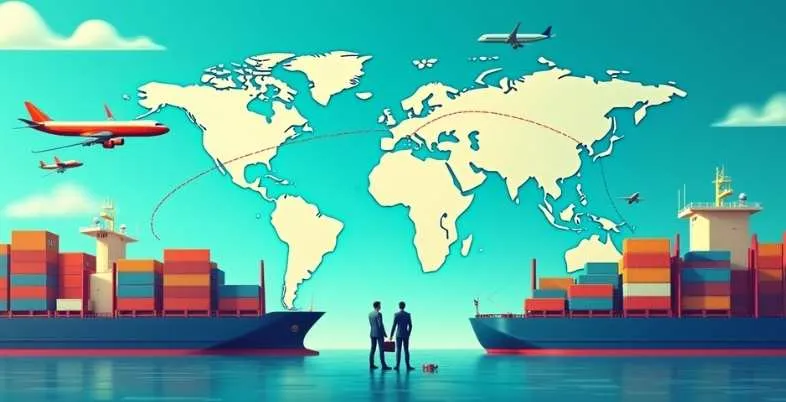
India is a great world trade player today. Now is the right time to venture into import and export if you want to start a business selling beyond your locality. You have the option of exporting Indian products to foreign countries and importing foreign products into India. The chances are many.
This information guide will demonstrate the most profitable Import-Export Business Ideas in India in the year 2026. It is composed in easy language that even beginners can understand.
Introduction: Why India will be a Global Trade Leader in 2026.
There has been a shift in trade in India over the last few years. It has now entered into a big global economy rather than mere buying and selling.
The following are the key figures that demonstrate the state of trade in India in early 2026:
- Record exports – India has been exporting goods and services worth 825.25 billion dollars last year and the export is increasing by over 6 per cent annually.
- $1 trillion objective – the government targets to attain exports of 1 trillion by the laps of FY2025-26.
- Global positioning- India is the 18th largest exporter and the 9th largest importer of goods in the world.
- Service exports India has a service export value of over $380 bn, with 80 percent of the exports being in IT, consulting, and digital services.
The statistics indicate that thousands of Indian small and medium companies are flourishing across the world.
Policies, GST, and Startups: The Backbone of Indian Trade.
It is not mere luck that India has been successful in trade. It is a result of several business-friendly policies that facilitate business formation.
- Trade-Friendly Policies: The Foreign Trade Policy has been simplified, and its forms have been reduced. Other programmes the government provides include RoDTEP, under which exporters are not required to pay taxes on goods exported to a foreign country. This makes Indian products cheaper and more competitive abroad.
- The Goods and Services Tax (GST) Role: Before GST, there were numerous taxes and confusing refund rules for exporters. The single GST system is now convenient.
- Zero-rated goods: you do not pay GST on goods you export.
- Quick refunds: You can claim tax breaks on your raw materials faster with a digital solution, keeping your money moving.
- An Ecosystem of Thriving Startups: India boasts of the third-largest startup culture in the world. Programs such as Startup India and Make in India provide grants, tax breaks, and simpler loans. This has enabled young entrepreneurs to develop and export products across sectors such as agtech, fintech, and direct-to-consumer brands.
Imports-Export Business Models.
You should choose how you want to conduct your business in advance. There are three main models:
- Merchant exporter/ importer- You purchase products of a local manufacturer and sell them overseas, or vice versa. It is easy to start with as it does not require factories.
- Manufacturer exporter- you make all the goods in your factory and export them to foreign countries. You have quality and are making more and you just require more money.
- Export management company or service provider- You are their middleman; you get the buyers or logistics organized on behalf of other firms at a fee. It is not risky but it needs talent.
How to Start an Import-Export Business in India (4 Easy Steps).
Launching a business can be challenging, but these four steps will help you obtain your trade license quickly.
Stage 1: Establish Your Business Organization.
First, choose a legal name. You may work as an individual, a firm or a limited company. Having registered, open a current bank account with a bank that deals with foreign exchange. Also, apply to obtain a PAN card of the business.
Step 2: Obtain Your Import-Export Code (IEC).
The IEC resembles a trade passport. Without it you can neither send nor receive goods. Apply online at the DGFT site. It costs about ₹500. It’s tied to your PAN.
Step 3: Registration at Export Promotion Councils (RCMC)
Join an Export Promotion Council that matches your product in order to get benefits and real buyers. Got spice to sell, become a member of the Spices Board. This provides you with a Registration-and-Membership Certificate, which is required in order to claim tax incentives.
Step 4: Select Your Product and Market.
Do not attempt to market everything to everyone. Identify products that are in demand, like organic honey or hand-made carpets, and identify those countries that demand them, like the US, UAE, or Netherlands. Visit the Indian Trade Portal to find out which countries have free-trade treaties with India and which are eligible to cut down duties.
Key Factors for a Profitable Import-Export Business
To ensure that you really make money, remember the following three things:
- Quality Control: International buyers are extremely tough. A single bad batch will destroy your image.
- Logistics & Packaging: It matters the way you pack and ship your products. When importing electronics, they must be shock-proofed. You need to manage cold-storage logistics if you are exporting fruit.
- Security of payment: It is always advisable to deal with a Letter of Credit (LC). This is the bank’s promise to the buyer that the buyer will receive payment after the goods are shipped. It is the safest way to conduct business with strangers on the other side of the ocean.
20 Import-Export Business Ideas in India for 2026.
This is a list of the most lucrative Import-Export Business Ideas of the current year which we have curated.
A) Export Business Ideas
1. Textiles & Garments

A country with a strong history of textile manufacturing, India will be the place to be in 2026, with sustainable fashion in high demand. It is a business dealing with the exportation of ready-made clothes, cotton fabrics, and silk products to the fashion centers such as the USA and Europe. The growing trend of the globalization of China Plus One policy has seen India as a destination of choice by major brands. With the attention to high-quality stitching and fashionable design, exporters have the opportunity to enter the market characterized by both traditional and modernized tastes. It is an industry that enjoys the perks of government programs such as the PLI (Production Linked Incentive) program.
- Why it is profitable: India has a high demand of cotton and ethnic wear in the world.
- Investment: ₹5 Lakhs -15 Lakhs (merchant exporting).
- Target Market: USA, UK, UAE, Australia.
- Profit Potential: 15% – 25%.
2. Handicrafts & Home Decor
Indian handicrafts are special in the sense that it is the soul of the local artisan. These products are luxury home decor and are very valued in Western countries, especially the Rajasthani metalwork and the Kashmiri wood carvings. Where there is mass-produced plastic, wooden furniture, a lamp made of brass, and ceramic pottery are unique and remarkable. This business will enable you to deal with rural artisans face-to-face, giving them an international platform and you healthy margins. The online marketplaces such as Etsy and Amazon Global have helped in reaching individual customers in other countries, but the bulk B2B exports are the most profitable option.
- Why it is profitable: low production costs and strong demand for exotic products in foreign markets.
- Investment: ₹2 Lakhs -7 Lakhs.
- Target Market: USA, Germany, France, and Japan.
- Profit Potential: 30% – 50%.
3. Herbal Spices and Products are Organic in nature.

India is called the Land of Spices and the contemporary trend is shifting towards Organic. Certified organic turmeric, cumin, and cardamom are products that the health-conscious consumers in the West are ready to pay a higher price. Beyond taste, spices have applications in the wellness and pharmaceutical sectors. The quality certifications such as the USDA Organic or the EU Organic are hard to attain, yet they are all worth the exportation of organic spices. The greatest secret to securing long-term deals with international supermarket chain and health food stores is the provision of traceable and pesticide free products.
- Why it is profitable: India produces 70 percent of the world’s spices, and organic versions command twice the margins.
- Investment Amount: 3 Lakhs 10 Lakhs.
- Target Market: USA, EU, Middle East.
- Profit Potential: 20% – 40%.
4. Herbal Supplements Ayurvedic Products.
Ayurveda ceases to be an Indian tradition and turns out to be a wellness movement worldwide. The world is searching for natural alternatives to chemical-based medicines such as Aswagandha supplements, Brahmi oils, etc. The Ayurvedic products export has increased tremendously after the pandemic, when people are more concerned about immunity. This is a business within the scope of which the certified Ayurvedic productions are to be collaborated with and such products are to be branded to the world audience. The success of this niche will rely on its clear labeling, clinical support, and on exploiting the trend of clean labels in developed countries.
- Why it is profitable: The increased global attention to holistic health and Green Medicine.
- Minimum Investment: ₹5 Lakhs -12 Lakhs.
- Target Market: USA, Canada, Germany, Russia.
- Profit Potential: 25% – 45%.
5. Leather & Footwear

The second largest manufacturer of footwear and leather garments is India. Indian leather is also recognized as being long-lasting and high end, and it is a favorite of the luxury brands in the world. It could be either completed leather shoes, fashionable handbags, or even industrial leather gloves; the export potential is huge. The industry also has the development of Vegan Leather as an alternative to leather in the form of pineapple or cactus which is finding its way into the markets that are environmentally conscious. A leather export business can grow very fast with the right quality check and international labor standards.
- Why it is profitable: Raw material and labor is abundant and is available in the hubs such as Kanpur and Chennai.
- Investment: ₹10 Lakhs -25 Lakhs.
- Target market: Italy, USA, UK, Germany.
- Profit Potential: 15% – 30%.
6. Jewelry & Gems
India is the center of the world in the extraction and refining of diamonds and creation of complicated jewels of gold. In particular, Surat and Jaipur are recognized throughout the world as the centres of crafts. Although precious stones are a classic, the increase in 2026 is actually in the Lab-Grown Diamonds and the costume jewelry. These products provide similar sparkling yet at a reduced price and they have been a success among the younger demographics of the US and Europe. The security and the specialized logistics needed to export jewelry is very high, and the cost of the tickets of the products is high enough to earn much money even for a few shipments.
- Why it is profitable: Dollars per gram; India dominance on diamond processing.
- Investments: 20 Lakhs and above (depending on the inventory).
- Target Market: USA, Hong Kong, UAE, Belgium.
- Profit Potential 10%-20% (brand/designer jewelry, more).
7. Processed Foods & Snacks
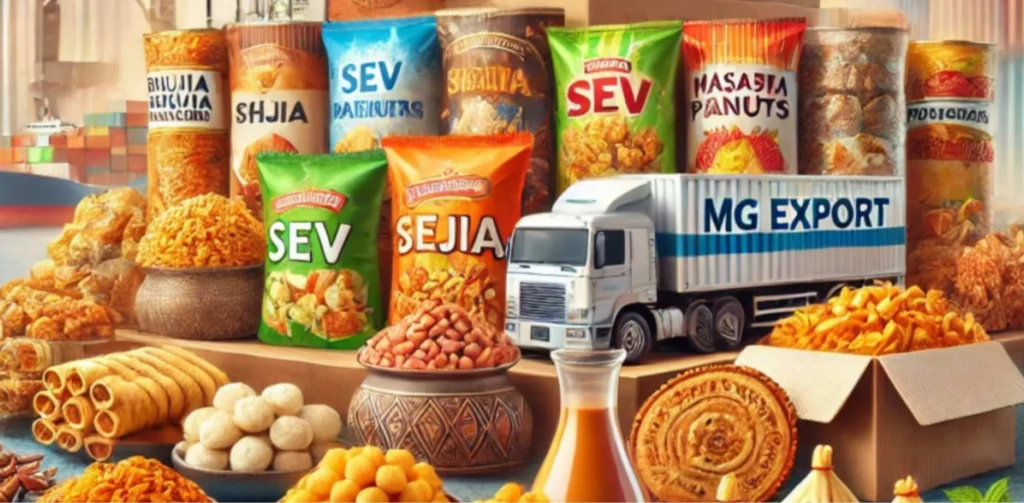
The Indian snacks, Bhujia, Samosas (frozen), and ready-to-eat meals are highly sold to persons who reside both outside and within India. Increasingly, the global population requires food companies that offer meals that are easy to heat and consume. This company exports the packaged foods that comply with the international safety standards like the FDA or the EFSA. The packaging should be attractive and ensure the food is preserved to last months. There is a great variety of food to export, including millet chips and vacuum-packed Alphonso mangoes.
- Why it is profitable: there are many Indians abroad, and the Indian flavor is gaining popularity.
- Investment needed: ₹5 Lakhs- 15 Lakhs.
- Target Market: USA, Canada, UK, Australia, UAE.
- Profit Potential: 20% – 35%.
8. Agricultural Products
India is a leading exporter of wheat, fresh fruits (grapes and bananas) and rice (Basmati in particular). Rural India is based on agricultural exports. Through facilitation with the farmers or Farmer Producer Organizations (FPOs), you are able to sell quality produce to other countries that require good food sources. APEDA assists the government in infrastructure and cold chain facilities. It is a bulk order business, and a good image of reliability and on-time delivery is important.
- Why it is profitable: food is a necessity worldwide.
- Investment: ₹10 Lakhs- 30 Lakhs (logistics-heavy).
- Target Market: Middle East, South East Asia, Africa.
- Profit Potential: 5-15 percent when there are high volumes.
You Might Like: Agriculture Business Ideas
9. Handloom Products & Fabrics
Khadi, Ikat, and Chanderi handloom fabrics are emerging as luxurious, sustainable fabrics in the world. In Paris and Milan, designers desire to wear something special, breathable, and environmental-friendly which carries a narrative. This is a business that specializes in slow fashion. Handloom products are unique, unlike the mass-produced power-loom cloth. Exporters are able to give high prices in the foreign upscale markets by narrating the heritage and the history of how they are produced.
Why it is profitable: limited market competition with mass producers, appeal of niche to luxury, and environmentally friendly fabrics.
- Investment: ₹3 Lakhs -8 Lakhs.
- Target Market: UK, France, Japan, USA.
- Profit Potential: 35% – 60%.
10. Green (Bamboo, Jute, Reusable Items) Products.

As lots of nations prohibit single-use plastics, jute and bamboo, which are the traditional materials in India, have become significant. In 2026, it is increasing the export of jute shopping bags, bamboo toothbrushes, and leaf-based disposable plates. The products are biodegradable and they comply with the global tendency of Zero Waste. Investment is minimal and raw materials are abundant in such locations as West Bengal and Assam. This is a desirable business to an individual who desires profit and a good environmental effect.
- Why it makes a good business: massive demand due to the bans of plastics in most developed nations.
- Investment: ₹2 Lakhs -6 Lakhs.
- Target Market: Germany, Netherlands, USA, Canada.
- Profit Potential: 25% – 40%.
B) Import Business Ideas
11. Electronics & Gadgets

India desire the latest technology. It could be very profitable to import smart home devices, special components of drones, or expensive gaming equipment. Although India is producing more electronics locally, there are still parts that are considered high-tech, which are better produced in Taiwan, South Korea, or China. It is all about identifying the next big thing before everybody. List on Amazon or on Flipkart, or develop your own techological brand.
- Why it is profitable: a large consumer base and rapid digital adoption.
- Investment needed: 10 Lakhs -25 Lakhs.
- Target Market: urban youthful Indians, tech enthusiasts.
- Profit Potential: 15% – 30%.
12. Health & Fitness Equipment
The Fitness in India has gone haywire. Home gyms are common with many people these days. It might be highly profitable to import good treadmills, rowing machines, or smart wearable fitness trackers. Whereas the production of simple weights is done locally, the high quality sensor driven equipment can be imported. This is a powerful move of collaborating with international fitness companies as an exclusive distributor in India. Preventive health focus has ended up making this market to be steady and rising.
- Reasons why it is profitable: growing disposable income and health awareness.
- Investment: 15 Lakhs- 40 Lakhs.
- Target Market: sports clubs, fitness-related households, gyms.
- Profit Potential: 20% – 35%.
13. Cosmetics & Beauty Products

The Indian cosmetic sector shifts to Korean (K -beauty) and European high-end skincare. Consumers desire special ingredients such as snail mucin, hyaluronic acid, or special sunscreens, which initially are released in foreign countries. The first-mover advantage is that by importing niche, high-quality cosmetic brands which are not present in India yet, one gains an advantage. CSDCO registration is a must but it is a worthwhile investment since international glow is in high demand.
- The reason it is desirable is its high margins and strong brand loyalty.
- Investment needed: ₹5 Lakhs -15 Lakhs.
- Target Market: Gen Z, millennials, professional salons.
- Profit Potential: 30% – 50%.
14. Automobile Accessories & Spare Parts
India exports numerous cars and bikes, and the market of car accessories is enormous. Fancy LED headlights, special alloy wheels or advanced infotainment may bring a lot of money in imported vehicles. Electric vehicles are on the rise and hence the increased demand of EV chargers and battery components. Garages and car fans will make excellent clients should you be able to sell them good, long-lasting parts that outperform the local ones.
- Why it will be profitable: Vehicle customization and maintenance is always in demand.
- Investment needed: 8 Lakhs -20 Lakhs.
- Target Market: car decoration stores, garages and people who own personal cars.
- Profit Potential: 20% – 40%.
15. Kitchen Appliances & Gadgets
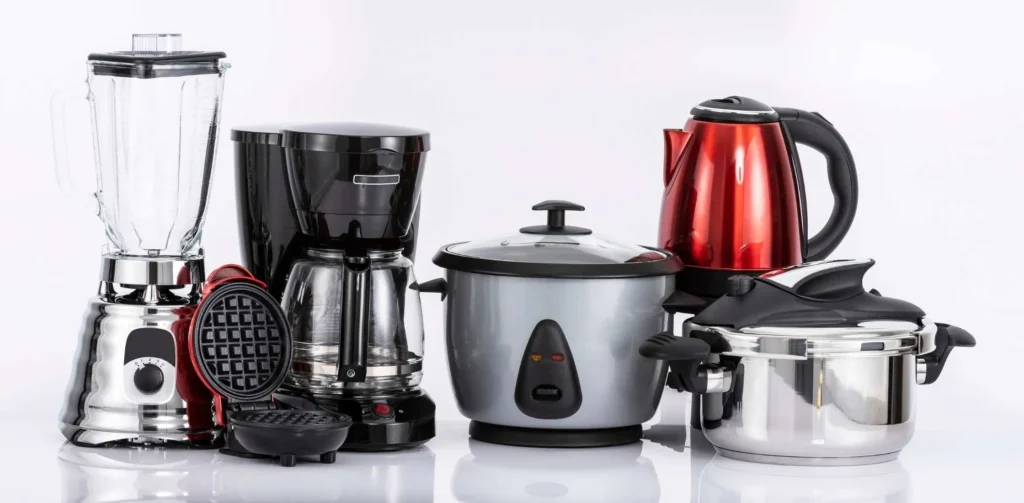
Indian cuisines are becoming smarter. Individuals desire intelligent air fryers, espresso makers, and food processors that can be used in many different ways. It is a good idea to import them either in Germany or China and sell them under your brand or as an agent. The trend of smart home is entering the kitchens; products are convenient, attractive and sell well online.
- Why it is a profitable idea: Urbanization and the invention of the MasterChef culture in the country.
- Investment Needed: 7 Lakhs -18 Lakhs.
- Target Market: Wedding gifting market, urban households.
- Profit Potential: 15% – 25%.
16. Luxury Products (Watches, Branded Items)
India has some of the highest millionaires in the world which provides it with a tremendous market in luxury imports such as Swiss watches, designer bags and expensive fragrances. These products are sold in low quantities but they are highly priced. You need to demonstrate the existence of the products and provide the shoppers with a unique experience to be successful. Not all but most importers establish a mini store in one of the best cities, but they also have their own online shop.
- Why it is profitable: Culture of the increasing Status Symbols and high-income population.
- Investment: 50 Lakhs+ (because of the cost of goods).
- Target Market: Ultra-High-Net-Worth Individuals (UHNIs).
- Profit Potential: 25% – 50%.
17. Specialty Chemicals and Industrial Goods.
This is a business-to-business trade. Special chemicals or specific machines used in industries like textile, pharma, and plastics are produced in Germany, Japan or USA. It might not appear glamorous but it is very stable as factories will always require such supplies. When you are able to establish a dependable supply chain of a certain chemical or a spare part of a German machine, you will receive regular corporate clients.
- The reason it is profitable: Essential to the Make in India manufacturing boom.
- Investment required: 20 Lakhs -50 Lakhs.
- Target Market: Pharmaceutical companies and manufacturing plants.
- Profit Potential: 10% – 20%.
18. Stationery & Office Supplies
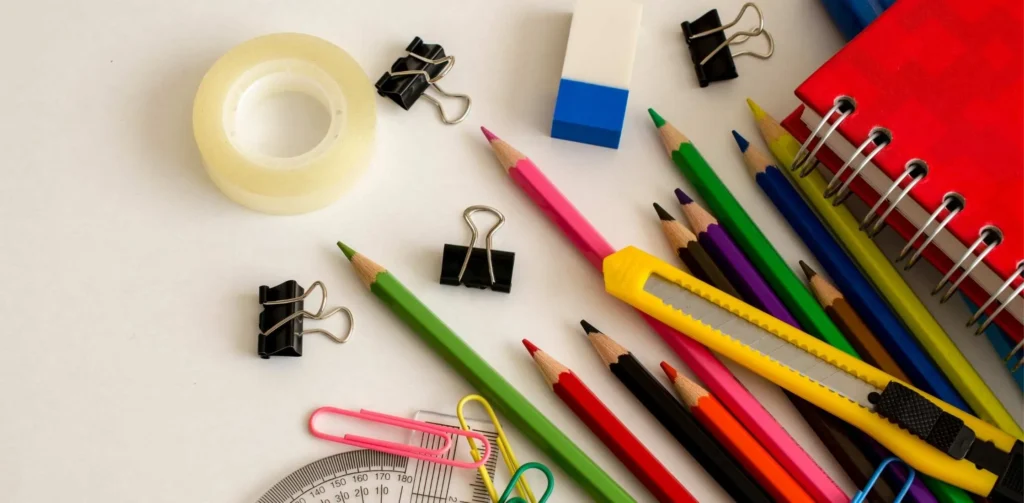
The plain pens are made at most locations, whereas in India there exists a massive passion towards good stationery. Brand Japanese pens, the best German notebooks, and office comforts. Since a good number of people work at home or in fancy shared offices, they desire clean and professional desks. The niche of importing special, attractive, and useful stationery is good and it also has a large market for corporate gifts at the festivals.
- Why it is profitable: Shipment cost is low and demand is high in the corporate/ student market.
- Investment: 3-8 Lakhs.
- Target Market: Corporate offices, Artists, Students.
- Profit Potential: 25% – 45%.
19. Toys & Educational Kits
The market of Indian toy consumers is moving towards STEM educational packages and away from cheap plastic toys. Parents desire teaching toys in coding, robotics or science. Education kits in the USA or Europe can generate significant revenue. Having stringent government quality regulations (BIS certification), a conforming importer has a comparative edge over the rugged market.
- Why it is profitable: Indian parents spend more on their children’s education.
- Investment: 5 Lakhs -15 Lakhs.
- Target Market: parents of children ages 3-12 and schools.
- Profit Potential: 20% – 40%.
20. Pet Products & Animal Feed
Indians have already started paying pets like family, and thus the demand of good pet food, grooming equipment, and smart devices such as automatic feeders is increasing. It can expand swiftly by importing healthy dog food or special accessories of western brands. The pet market has been stable even during bad times hence it is a safe investment in 2026.
- Why it is profitable: The pet industry is growing rapidly, and repeat-purchase rates are high.
- Investment Needed: 5Lakhs -12Lakhs.
- Target Market: Urban city pet owners.
- Profit Potential: 20% – 35%.
Market Research & Finding Buyers
The question that a new trader will ask is: How could I get buyers to my products?
- B2B Portals: Alibaba, IndiaMART, and TradeIndia are some of the websites that assist traders in connecting with buyers. Establish a professional profile on it.
- Trade Fairs: Go to the Trade Fair- such as India International Trade Fair (IITF) or international Trade Fair such as the Canton Fair in China or Gulfood in Dubai to meet with buyers personally.
- Digital Marketing: LinkedIn to identify procurement managers of overseas firms. Trust is also established by a clear and professional web site and a clean Instagram page.
- Indian Embassies: Each of the Indian embassies has a commercial wing. Send them a list of good importers in that country of your product.
Conclusion
Nowadays, import-export in India is not only the prerogative of big businesses. Anyone can commence small and go global with a proper IEC code, good quality as well as a little bit of market research. It is your market whether you sell Indian spices or bring the most modern fitness equipment to the market. Indian trade in the year 2026 is a golden year. There is improved infrastructure, easer taxes and strong demand of Brand India. Find an idea, do your research, and make that first step on your way to becoming an international entrepreneur!
FAQs
1. Is service exporting under the IEC code?
No. Not all services would have to have it, but it would be recommended in case you would like to have government benefits or incentives.
2. Is it possible to conduct import-export business at home?
Yes. Being a Merchant Exporter, you are able to handle a lot of paperwork and deals at the comfort of your house whilst the goods pass through the manufacturer to the port.
3. IEC: What is the time required to obtain it?
When your documents are in, you are normally issued with IEC within 24-48 hours of applying online.
4. How is the safest way of accepting international payments?
An irrevocable Letter of Credit is the safest one, then an advance payment or documents against payment (DP).