


Customer churn is one of the most significant business problems of the present that has a direct influence on revenue, prospects of growth, and sustainability. With the growing competitive market where firms are spending five to seven times more to acquire new customers than to keep them and the high turnover rate, the firms are resorting to enhancing technological solutions that forecast and avert loss of customers.
Churn Prediction Software & Tools have become essential resources to businesses in this day and age, integrating artificial intelligence, machine learning, and data analytics to mark high-risk customers before they go. These advanced platforms identify the trends of customer behaviour, measurement of engagement, transaction history, and myriad other data points and convert them into actionable insights that enable businesses to institute proactive retention actions that ultimately change the customer relationship and increase bottom-line performance.
What is a Churn Prediction System?
Definition
A Churn Prediction System is a sophisticated analysis tool which is based on machine learning algorithms, predictive modelling and data science methods to predict which customers will tend to end their relationship with a business. These systems use historical data, behavioural trends, usage rate, demographics and engagement metrics to ensure churn probability scores on an individual customer or customer group basis.
How Churn Prediction Works
- Data Collection: Gathers customer data across a variety of customer application points such as purchasing history, support interactions, browsing behaviour and engagement data.
- Feature Engineering: Determines and develops the variables that are significant and affect retention of customers, like frequency of use, payment patterns and satisfaction measures.
- Model Training: This strategy uses machine learning to train on previous data of churn and form predictive dependencies among features and outcomes.
- Risk Scoring: Attaches probability scores to customers who have a probability of churning in a given time period.
- Action Triggering: Sends a notification and suggestions of intervention strategies to customers who have reached preset risk limits.
Benefits of Using Churn Prediction Software
- Proactive Retention: Customers who are at risk can be found early so that the businesses can use proactive retention campaigns to improve retention with the customers before they churn.
- Cost Efficiency: Minimises the customer acquisition costs by maximising the lifetime value of new customers by increasing retention rates.
- Revenue Protection: This prevents loss of revenue by ensuring that there is no loss of customers and that the revenue remains stable even when faced with losses occurring as a result of customers leaving.
- Individualised Engagement: Will cash in on individual churn risk factors and customer interests to develop tailored communication rewards.
- Strategic Insights: It furnishes useful information on the reasons behind customer abandonment, which will affect product or service enhancements.
Types of Churn Prediction Models
- Classification Models: Prediction systems that can be used to define the user as likely to churn or likely to continue based on an algorithm that may be based on decision trees and random forests.
- Regression models: Statistical theorisations that generate continuous scores of churn probability, which offer fine-tuning of risk measurements on each customer.
- Survival Analysis Models: The models are time-based predictive tools that approximate the likelihood of a customer churning to allow focused interventions to be implemented at the appropriate time.
- Deep Learning Models: Neural networks and architectures to tackle complex, non-linear relationships with large-scale data to make highly accurate predictions.
- Ensemble Models: Hybrid algorithms that use several algorithms together to use the strengths of the various algorithms and enhance the overall accuracy.
Pros and Cons of Each Model Type
| Model Type | Pros | Cons |
|---|---|---|
| Classification | Simple, fast, clear outputs, low computing cost | Limited detail, struggles with complex or imbalanced data |
| Regression | Predicts numeric values, shows relationships, statistically reliable | Sensitive to outliers, assumes linear patterns |
| Survival Analysis | Predicts time-to-event, handles churn & censored data | Complex, needs large datasets |
| Deep Learning | Very accurate, handles complex & unstructured data | Data-hungry, hard to interpret, expensive |
| Ensemble Models | High accuracy, stable results | Computationally heavy, complex to maintain |
Top 10 Churn Prediction Software & Tools (2026 List)
1. ChurnZero
Type: Customer Success Platform
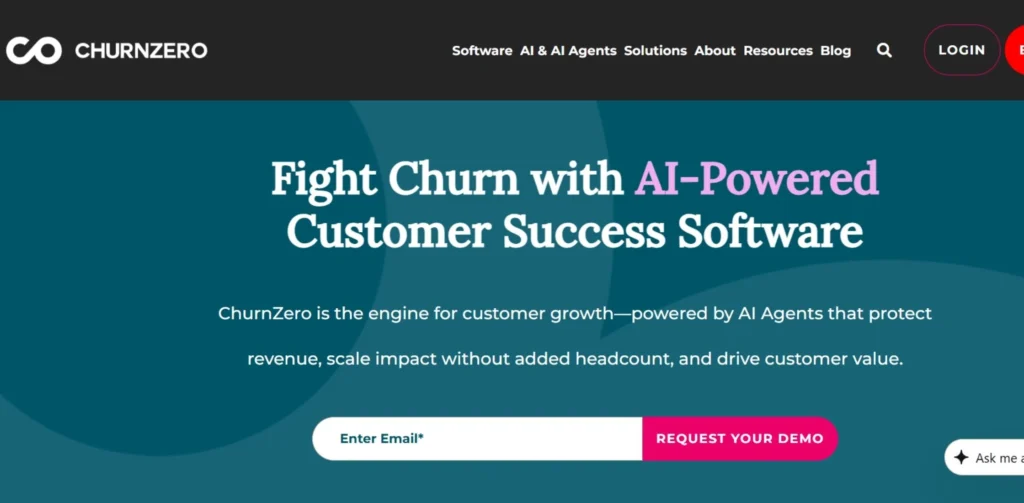
ChurnZero is a Customer Success software that was created specifically to support subscription-based companies. It is based on real-time customer intelligence and automated engagement operations aimed at assisting companies in lessening their churn and broadening customer engagement by utilising predictive analytics and actionable insights.
Key Features:
- Real-time health scoring
- Self-service consumer experience.
- In-app engagement campaigns
- Visibility of the usage data.
Free/Paid: Paid (Custom pricing)
Best For: B2B SaaS subscription companies.
Website: churnzero.com
2. Gainsight
Type: Customer Success Management Platform
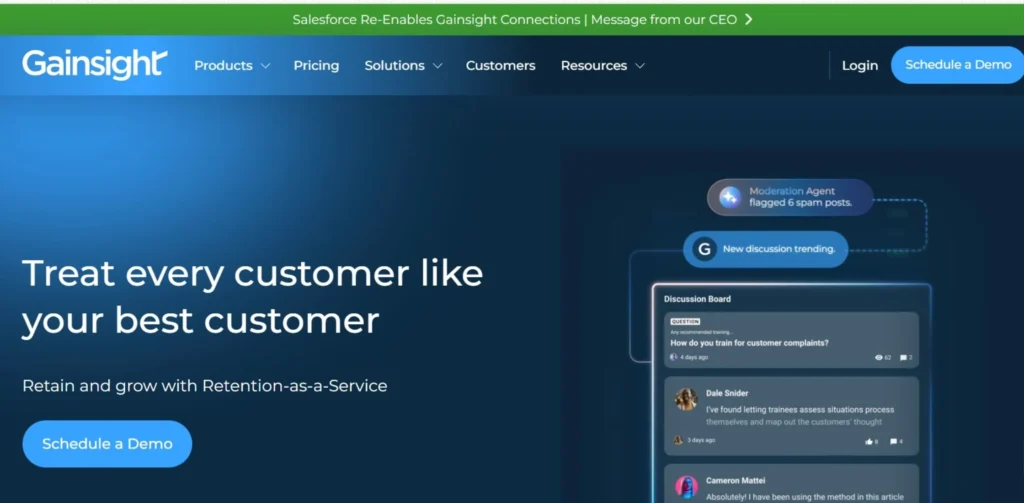
Gainsight is a customer success platform built to handle enterprise-level requirements and utilize the elements of artificial intelligence and machine learning to predict customer churn, encourage product adoption, and increase customer lifetime value on the basis of data-driven insights and automated workflows.
Key Features:
- AI-powered health scores
- Travel orchestration engine.
- Community management of customers.
- Innovative analytics dashboard.
Free/Paid: Paid (Custom enterprise pricing)
Best For: Enterprise B2B customer success teams
Website: gainsight.com
3. Custify
Type: Customer Success Software
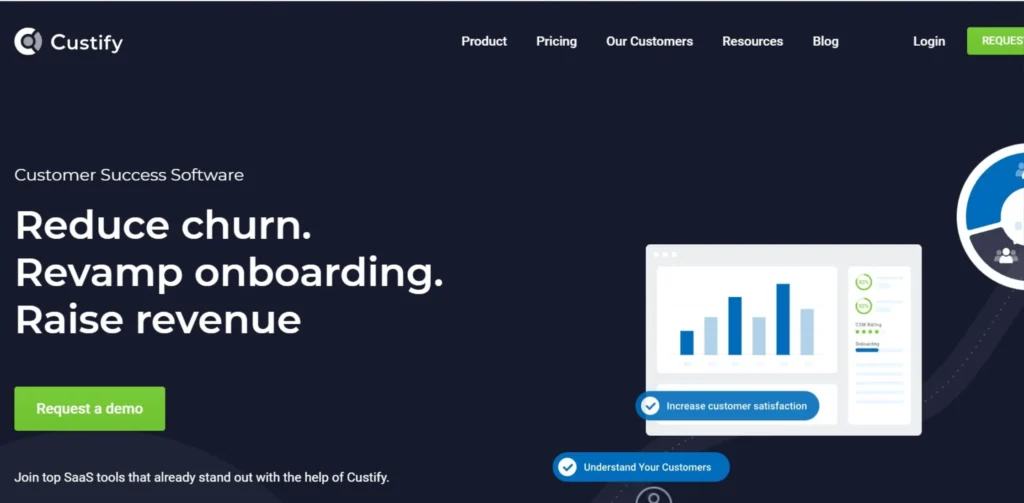
Custify is a niche customer success application that companies designed with the purpose of growing SaaS companies, giving its users robust churn prediction features, customer health metrics, and workflow automation to assist customer relationship managers with proactively managing customer relationships and avoiding customer churn.
Key Features:
- Customer health monitoring
- Automated task workflows
- Lifecycle campaign management.
- CRM system integration.
Free/Paid: Paid (Starts at $999/month)
Best For: Mid-market SaaS companies
Website: custify.com
4. Totango
Type: Customer Success Platform
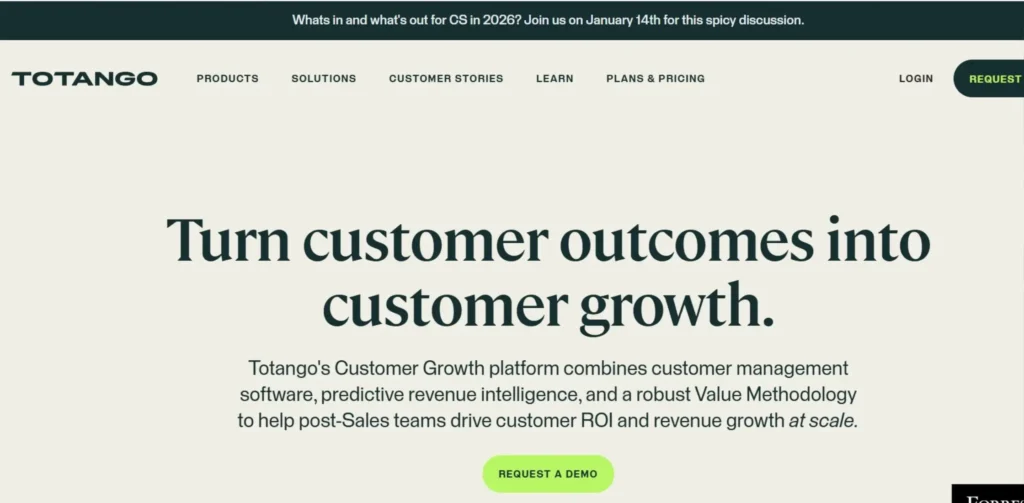
Totango provides off-the-shelf customer success services and predictive analytics to enable companies to grow their customer retention in an efficient fashion. The platform unites proactive engagement with automated processes of identifying areas of churn risk to support proactive engagement.
Key Features:
- Pre-built success programs
- Tools of customer segmentation.
- Multi-touch campaign coordination.
- Business tool integration.
Free/Paid: Paid (Custom pricing available)
Best For: Scalable customer success operations
Website: totango.com
5. Salesforce Einstein Analytics
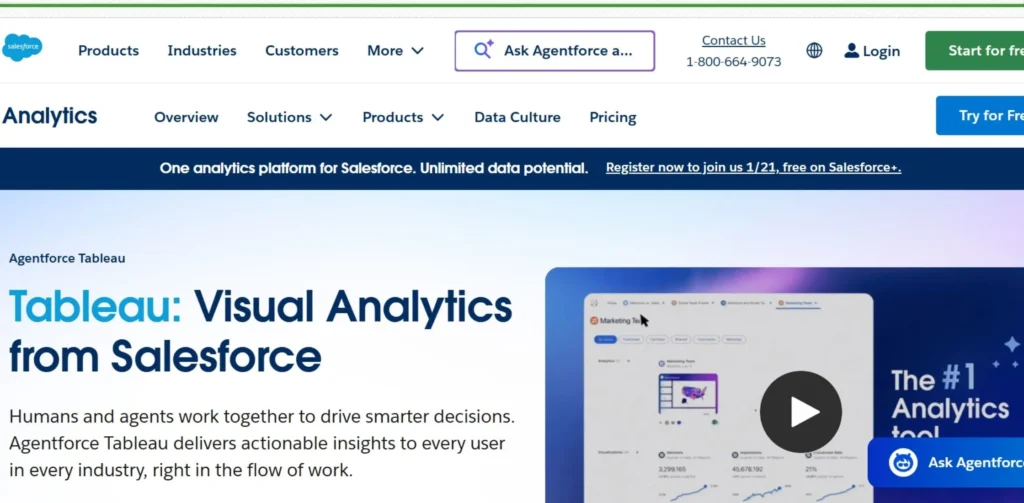
Type: AI-Powered Analytics Platform
Salesforce Einstein Analytics introduces AI-based features to the Salesforce platform, which offers advanced churn prediction engine models that are easily ingested into current CRM data to give one full coverage and predictive smarts.
Key Features:
- Artificial Intelligence predictive analytics.
- CRM data integration
- Customizable dashboards
- The generation of automation of insights.
Free/Paid: Paid (Part of Salesforce licenses)
Best For: Salesforce ecosystem users
Website: salesforce.com/products/einstein-analytics
6. Planhat

Type: Customer Platform for B2B
Planhat is a customer platform that provides comprehensive customer success, product analytics, and revenue operations and is meant for B2B companies. It provides advanced churning capabilities by tracking behavior and health scoring as well as automated processes to enable teams to retain and expand customer accounts.
Key Features:
- Customer health scoring
- Revenue forecasting tools
- Workflow automation engine
- Product usage tracking
Free/Paid: Paid (Custom pricing)
Best For: B2B companies with complex customers
Website: planhat.com
7. Pecan AI
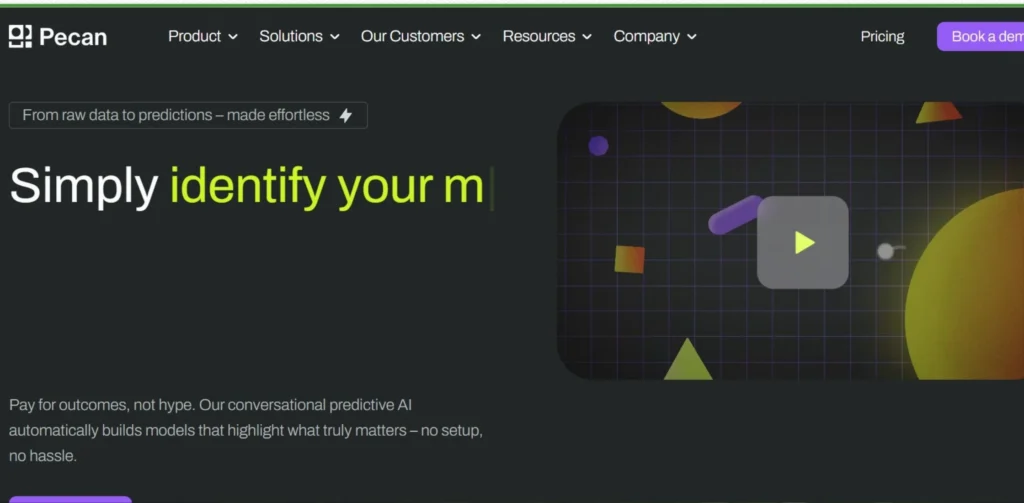
Type: Predictive Analytics Platform
Pecan AI is a low code machine learning predicting platform that democratizes machine learning among business individuals. It is an automated churn prediction modelling, which does not need any significant data science skills and provides the accuracy and actionable forecasts of the enterprise quality.
Key Features:
- Automated machine learning
- Low-code model building
- Several sources of data assimilation.
- The optimization of the model is continuous.
Free/Paid: Paid (Custom pricing)
Best For: Business teams without data scientists
Website: pecan.ai
8. Hubspot Service Hub
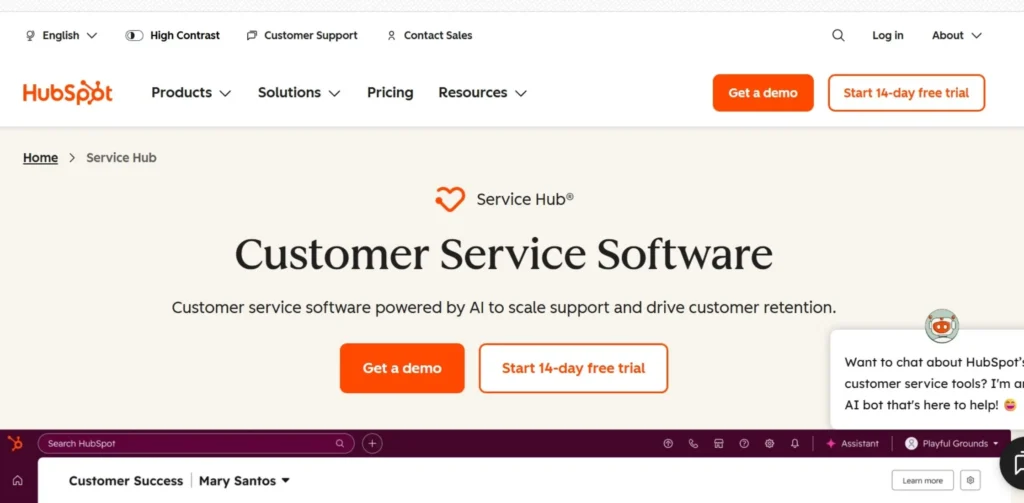
Type: Customer Service Software
HubSpot Service Hub is a combination of customer service solutions and predictive analytics to enable businesses to understand which customers are dissatisfied, how likely they will churn, and provide an incredible customer experience to become more retained and score higher on rating scales.
Key Features:
- Gathering of customer feedback.
- Automation of the ticketing system.
- Knowledge base management
- Predictive lead scoring
Free/Paid: Free plan available; Paid plans start at $45/month
Best For: Growing businesses seeking integrated solutions
Website: hubspot.com/products/service
9. Mixpanel
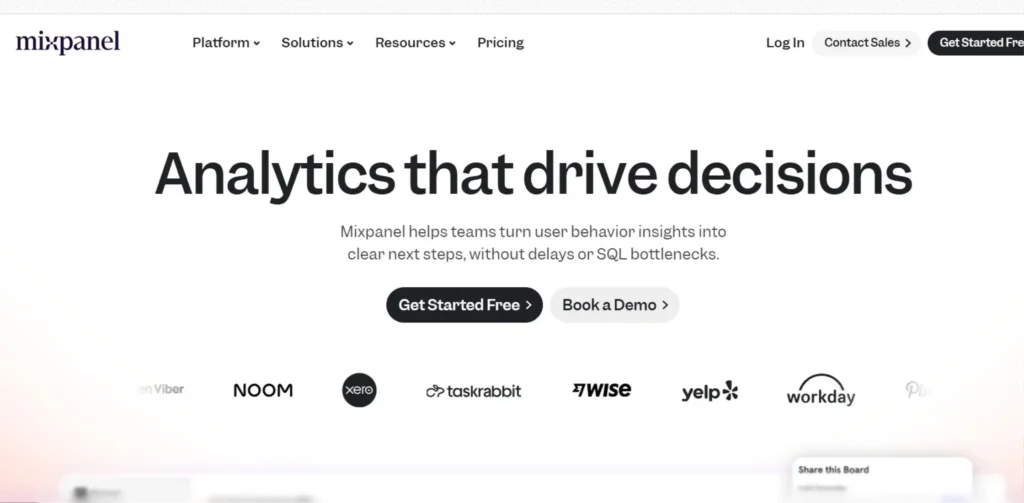
Type: Product Analytics Platform
Mixpanel is a tool of strong product analytics that enables companies to comprehend user behavior, interaction patterns, and adoption of features. Its retention analysis and cohort tracking feature render it brilliant in detecting the churn indicators among the data of product usage.
Key Features:
- Tracing of event based analytics.
- Cohort analysis tools
- Retention rate monitoring
- A/B testing capabilities
Free/Paid: Free plan available; Paid plans custom
Best For: Product-led growth companies
Website: mixpanel.com
10. Amplitude
Type: Digital Analytics Platform
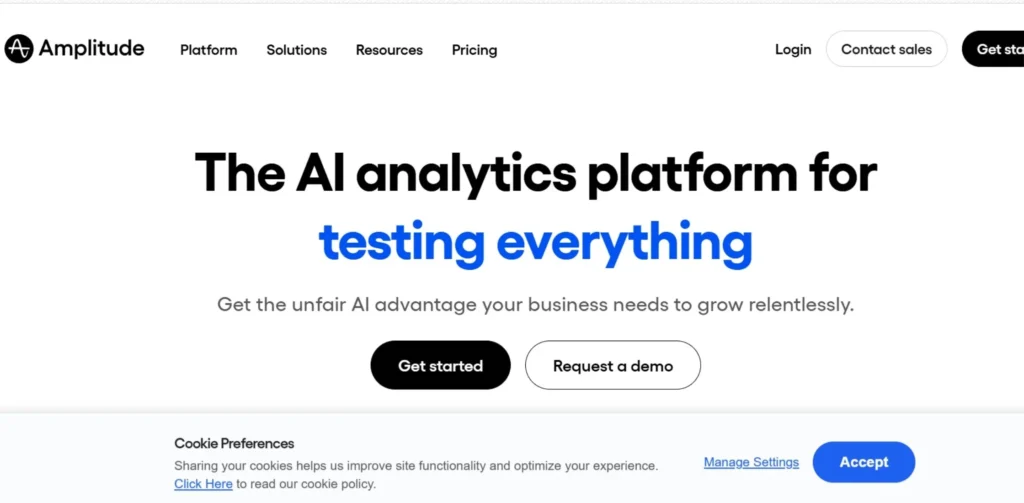
Amplitude is a utility digital analytics tool that assists product groups to become aware of user paths, pinpoint drop-off spots, and anticipate churn based on behavioral cohort evaluation. It has a highly advanced segmentation strategy to target at-risk users.
Key Features:
- Behavioral cohort analysis
- User journey mapping
- Dashboards of retention.
- Missionary intelligence competencies.
Free/Paid: Free plan available; Paid custom pricing
Best For: Product and growth teams
Website: amplitude.com
How to Choose the Best Churn Prediction Software
- Evaluate Integration: Be certain that the Churn Prediction Software and Tools are properly integrated with the existing stack of technology, including CRM applications, marketing automation applications, data warehouses and customer support applications, to make the complete range of data accessible.
- Assess Scalability Needs: Select solutions which can be expanded with your business, capable of managing greater data volume, users and complexity without losing performance or creating the need to overhaul the entire system.
- Take into Account User-Friendliness: Give preference to the platforms with easy interfaces to be adopted by your team within a short period without introducing long training, and allow the time-to-value to be more rapid and the organisational adoption more extensive.
- Review Predictive Accuracy: Test case studies, demand demonstrations using your data and review model performance measures to make sure the software provides you with sound predictions to your industry and customers.
- Analyse Cost-Benefit Ratio: Evaluate the possible ROI by comparing the cost of subscription to the probable value in terms of revenue retention that would have been achieved by preventing churn, the calculations of direct software costs, as well as resources to implement.
Implementation Tips for Businesses
- Begin with Clean Data: Clean and audit your customer data before deploying Churn Prediction Software and Tools to eliminate both duplicates, errors and develop data governance rules to guarantee accuracy in predictions.
- Specify Sensible Success Measures: Have some churn baseline data, have something that is improving at a realistic rate, and have the key performance metrics that will be measured according to your churn prediction efforts.
- Establish Cross-Functional Teams: engage customer-success, sales, marketing and product-development stakeholders to attain overall knowledge on aspects of churn and retention strategies.
- Start with Pilot Programs: Experiment with Churn Prediction Software and Tools on small groups of customers or with special applications and then implement it at full scale when you have perfected your strategies and can prove the value.
- Write Action Location: Compose intervention plans at various standard churn risk levels where your team can be very certain about how to act when the software sends an at-risk customer alert to them.
Conclusion
In the contemporary business world, the strategic usage of Churn Prediction Software & Tools has become indispensable to businesses that want to gain sustainability in the competitive business environments. These advanced systems will convert this raw data into actionable intelligence to help companies change their response to damage control to take the initiative in managing their relationships with the customers. These tools enable organisations to work towards specific retention strategies that allow them to protect their revenue and ensure the greatest lifetime customer value by accurately identifying at-risk customers and understanding the drivers of churn.
With the further development of artificial intelligence and machine learning technologies, Churn Prediction Software & Tools may only get more precise and user-friendly, which makes them necessary to businesses of any scale. The investment in the appropriate churn prediction solution as of today places your company in the position of stimulated customer loyalty, enhanced profitability, and long-term competitive advantage in the more customer-centric business environment.
FAQs
How is the average accuracy rate of the churn prediction software?
Accuracy rates of the majority of the contemporary Churn Prediction Software and Tools are between 75-90 per cent, contingent upon the data quality and the type of industry and complexity of the models. Enterprise solutions that have a wide range of training data usually have a high accuracy of more than 85%.
What is the cost of churn prediction software on average?
The prices highly depend on the size and characteristics of the company. Its small business solutions are offered at approximately 500-1,000 monthly and its enterprise Churn Prediction Software and tools range between 5,000 to 20,000 and others at custom pricing plans.
Is churn prediction beneficial to small businesses?
Absolutely. There are numerous Churn Prediction Software and Tools with freely available or low-priced versions specifically aimed at small businesses and are a great ROI since the better customer retention achieved is attained without incurring costly investments.
What information is required to do a successful churn prediction?
The key information is that of customer demographics, history of purchases, consumer usage pattern of products, support responses, purchase history, and engagement history and customer satisfaction score. The more data sources in general, enhancing predictive success and valuable action.