


Content syndication has turned out to be critical to businesses and creators who want to increase their online presence. Republishing your content across various content syndication platforms helps you to reach more people, generate traffic and become an authority in your area. The appropriate syndication approach may revolutionise your content marketing initiatives, and make solitary pieces influential resources that will perform on the web and create steady interaction.
What Is Content Syndication & Why It Matters
- Increased Reach of Audience: Syndication introduces your material in front of millions of prospective readers outside of your site traffic.
- Enhanced SEO Results: Good backlinks on credible websites will boost your search engine rankings as well as domain authority.
- Greater Brand Authority: Being featured in already developed sources makes you an authority figure in your field.
- Affordable Marketing: It is possible to achieve maximum ROI through cost-effective marketing on many syndication platforms that are free to use.
- More Leads: Strategic syndication will push qualified traffic to your website, and in the process, turn readers into customers.
Comparison Table
| Platform | Rating | Best For |
| Outbrain | 4.0/5 | Content marketers and publishers seeking paid reach |
| Medium | 5.0/5 | Thought leaders and writers building organic audiences |
| Quora | 4.0/5 | Professionals answering questions in their expertise areas |
| 4.0/5 | Individual creators with visual, magazine-style content | |
| 5.0/5 | B2B marketers and professional thought leaders | |
| 4.0/5 | Brands engaging niche communities with authentic content | |
| Tumblr | 3.0/5 | Visual creators in art, photography, and fashion |
| Taboola | 4.0/5 | Businesses investing in native advertising campaigns |
| SlideShare | 4.0/5 | Educators and businesses sharing presentations and documents |
| Quuu Promote | 3.0/5 | Social media marketers are automating content distribution schedules |
Top 10 Content Syndication Platforms
1. Outbrain
Rating: 4.0/5
Website: https://www.outbrain.com/
Best for: Content marketers, brands, and publishers
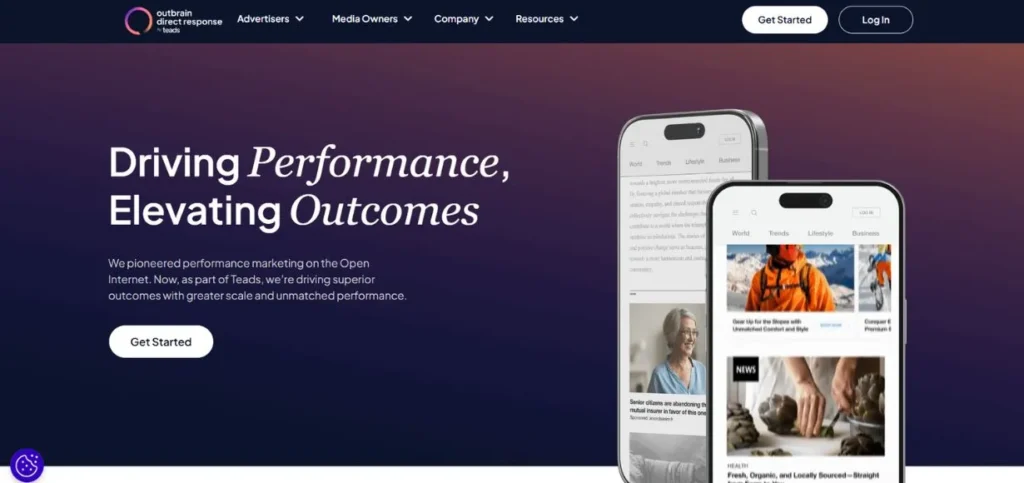
Outbrain uses native advertising to place your content in premium publishers such as CNN, People and ESPN. It is a cost-per-click platform, meaning that you will only be charged after real interaction. Outbrain offers huge exposure to content marketers and brands with 557 million monthly users.
The platform is perfect at positioning your content as sponsored recommendations in between editorial content, and it does so in a way that is not obtrusive. The gain of publishers is that they are able to monetise their websites without compromising the user experience. Outbrain has advanced targeting solutions that can be used to target particular demographics and interests.
Key Features:
- Premium publisher partnerships drive visibility
- Cost-per-click model ensures budget control
- Advanced targeting reaches specific audiences
- Real-time analytics track campaign performance
- 557 million users provide a massive reach
Pros:
- Massive reach through premium publishers
- Transparent CPC with flexible budgets
- Sophisticated targeting for precise audiences
Cons:
- Requires a significant advertising budget investment
- Expensive for highly competitive niches
- Learning curve for campaign optimisation
Price: Plan starts at $ 49/month
Also Read: Top Customer Engagement Platforms
2. Medium
Rating: 5.0/5
Website: https://medium.com/
Best for: Thought leaders and writers
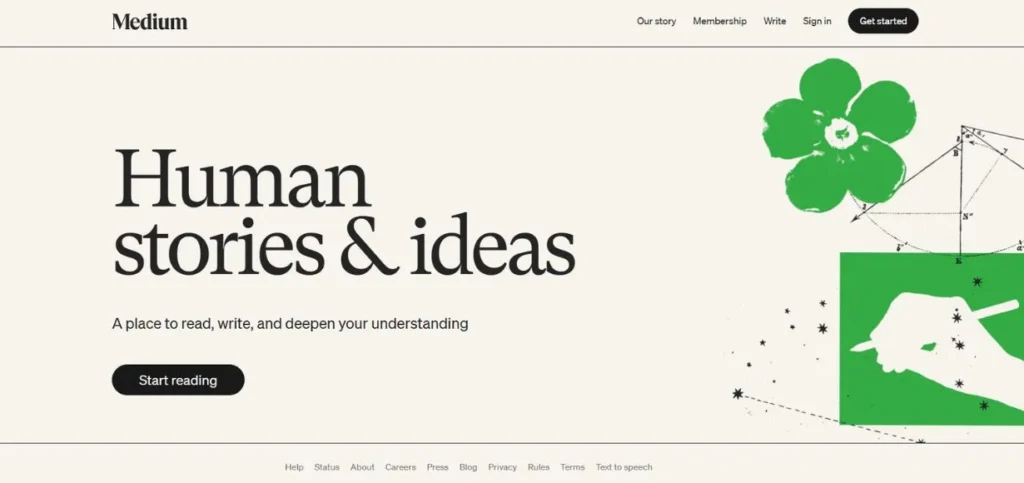
The content operations of Medium have been solidified as the best place to consume long-form content, and now has 100 million monthly users who are interested in quality articles. The platform accepts different content such as articles, photos, audio, and videos, which can be published freely. Authors are able to share individual posts or write for a magazine, and they generate their own following.
The recommendation feature brings out good quality content to the interested readers, independent of the number of followers you already have regardless of the number of followers you already have. The in-built commenting feature of Medium creates a valuable conversation and aids in content spreading.
Key Features:
- Multiple formats: articles, photos, videos
- Algorithm surfaces quality content automatically
- Collaborative publications build community engagement
- Active commenting fosters reader discussions
- 100 million users seek quality
Pros:
- Completely free with no costs
- Excellent for building personal brands
- Strong SEO from a high authority
Cons:
- Limited customisation for branding identity
- Platform ownership means policy risks
- A competitive environment requires quality content
Price: Free
3. Quora
Rating: 4.0/5
Website: https://www.quora.com/
Best for: Thought leaders and professionals in various niches
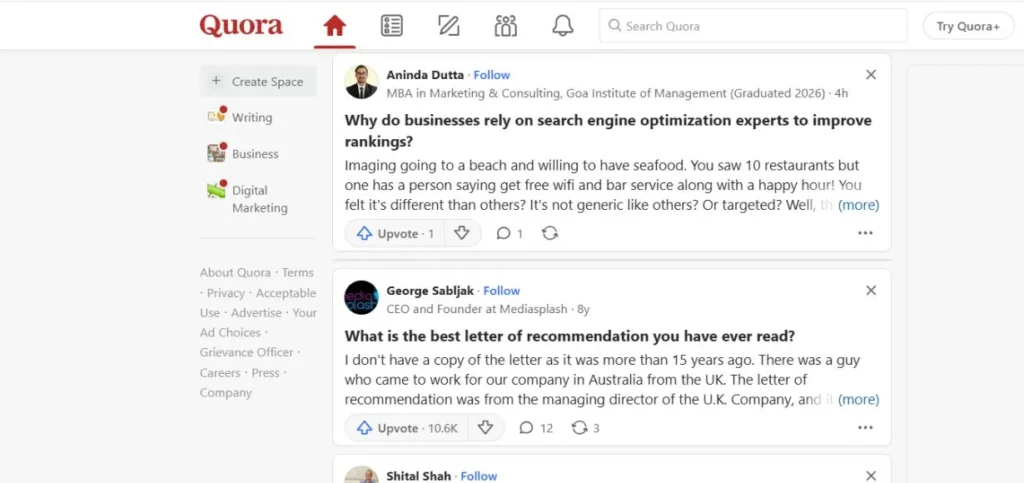
The question-answer structure of Quora links over 400 million monthly users with professionals who answer questions and provide some valuable information. Your interaction with questions in your field of knowledge presents knowledge in a natural way of marketing your work. This will create organic traffic since users will find your answers within the search and platform recommendations.
Quora enables professionals to be authoritative, generate traffic to their websites and connect with prospective clients. Consistency and true knowledge are the key and not promotional material.
Key Features:
- The 400M visitors are bridged using the question-answer format.
- The system of upvoting compensates useful answers.
- Topic-following is specifically industry-focused.
- Traffic is generated by the integration of search engines.
- Professional credentials are featured through profile building.
Pros:
- Free platform generates organic traffic.
- Gathers power through all-embracing reactions.
- Good responses generate continuous payoffs.
Cons:
- Not easy, and one should be involved frequently.
- Close control restricts advertising communications.
- Patience is needed to achieve success.
Price: Free
4. Flipboard
Rating: 4.0/5
Website: https://about.flipboard.com/
Best for: Individual content creators
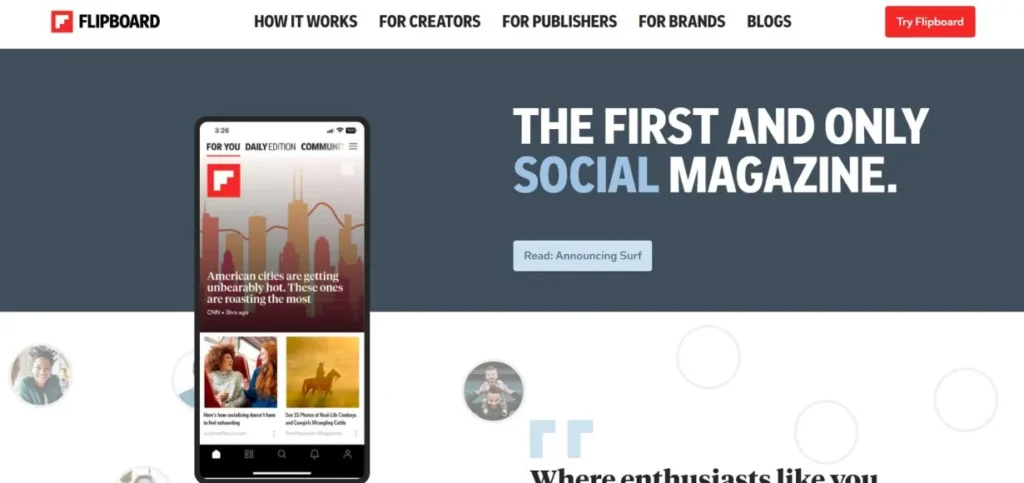
Flipboard is turning content consumption into a magazine-like experience, with 145 million monthly visitors. The platform is a digital magazine that brings together news, articles, images, and videos from different sources to form personalised magazines that the users can flip through. The discovery features offered by Flipboard give content creators an advantage in making content that is important to the readers visible.
The visual focus of the platform renders it suitable for the content that incorporates a great deal of images or multimedia. Inbuilt sharing features enable users to organise and share content that they find valuable, and it will spread your reach naturally. The simple design and easy navigation of Flipboard make users spend more time on the application compared to the traditional feed-based systems.
Key Features:
- Publication style layout gathers various sources.
- Recommendation engine points out interesting material.
- Combined distribution builds dynamic fan bases.
- Rich media content is appropriate in image-oriented design.
- Organised collections are visited by 145 million users.
Pros:
- Free of charge and eye-catching graphic design.
- Good exposure of content makers.
- Easy to combine aggregated and personalized posts.
Cons:
- Few personalisation of content display.
- Performs well with image intensive materials.
- Limited activities compared to domineering networks.
Price: Free
5. LinkedIn
Rating: 5.0/5
Website: https://www.linkedin.com/home
Best for: Thought leaders and B2B content
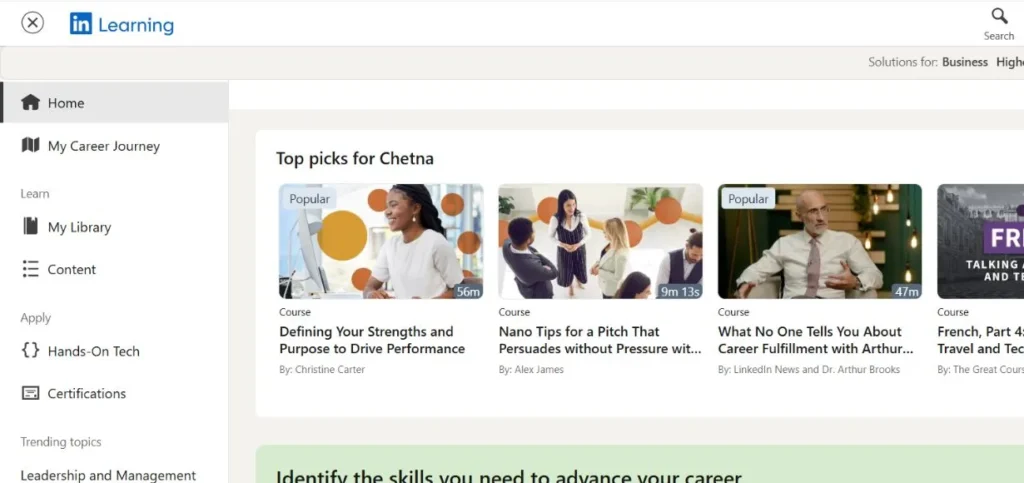
LinkedIn has 850 million users, which dominates the market in professional networking and content delivery in the B2B market. Due to the professional orientation of the platform, your content is delivered to decision-makers, peers in the industry, and prospective clients. The algorithm of LinkedIn gives more exposure to engagement, and quality content is very noticeable in the appropriate networks.
Posting in groups of niche will allow focused conversation and networking. The publishing platform of LinkedIn supports not only short posts but also long ones and can be used to implement many different content strategies. As a B2B marketer or thought leader, LinkedIn cannot be ignored as a way of gaining authority in the industry and getting quality leads.
Key Features:
- 850 million professional users worldwide
- Publishing supports short and long-form
- Niche groups facilitate targeted networking
- Algorithm favours high-engagement content
- Advanced targeting for sponsored posts
Pros:
- Unmatched for B2B marketing reach
- Free organic reach with engagement
- Establishes thought leadership effectively and quickly
Cons:
- Professional environment limits content types
- Algorithm changes impact organic reach
- Paid promotion is expensive versus competitors
Price: Free
6. Reddit
Rating: 4.0/5
Website: https://www.reddit.com/
Best for: Individuals and businesses
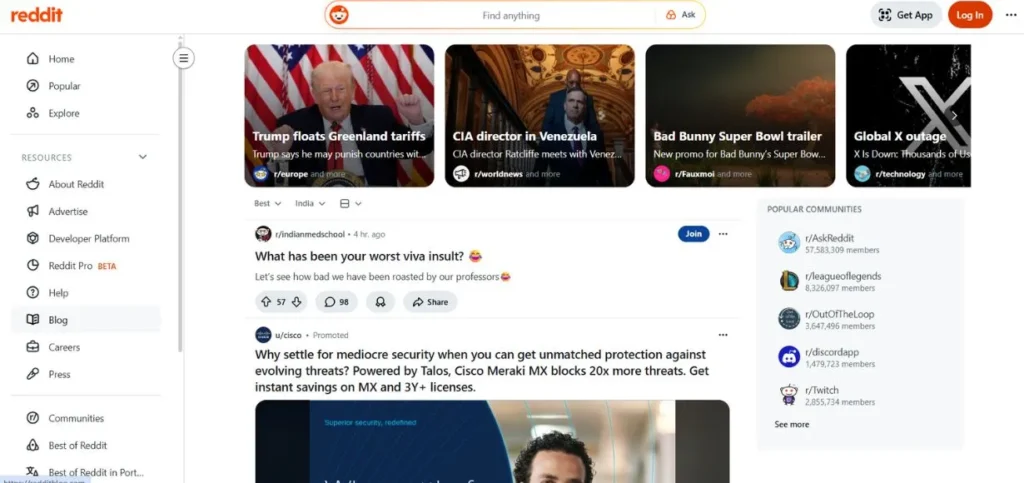
The 2 billion monthly active users of Reddit have a niche community called subreddits, which are dedicated to a certain interest. To be successful on Reddit, it is necessary to get acquainted with the culture of the community and post truly useful content and not blatant advertisements. Quality content is promoted, and irrelevant posts are removed by the voting system.
The development of strategic participation develops trust among communities, and the users are more open to your content. Brands, especially B2C, are helped by the trend of engaged users and honest conversations on Reddit. Reddit, however, demands patience and actual community participation, and not instant promotional gains.
Key Features:
- 2 billion users in niche communities
- Voting system elevates quality content
- Community discussions foster authentic engagement
- Search tools identify relevant subreddits
- AMAs provide direct audience engagement
Pros:
- Massive audience across every topic
- Free with viral content potential
- Authentic conversations build brand trust
Cons:
- Strict rules against promotional content
- Requires genuine participation and time
- Downvotes harm visibility and reputation
Price: Free
7. Tumblr
Rating: 3.0/5
Website: https://www.tumblr.com/
Best for: Microbloggers and visual content creators
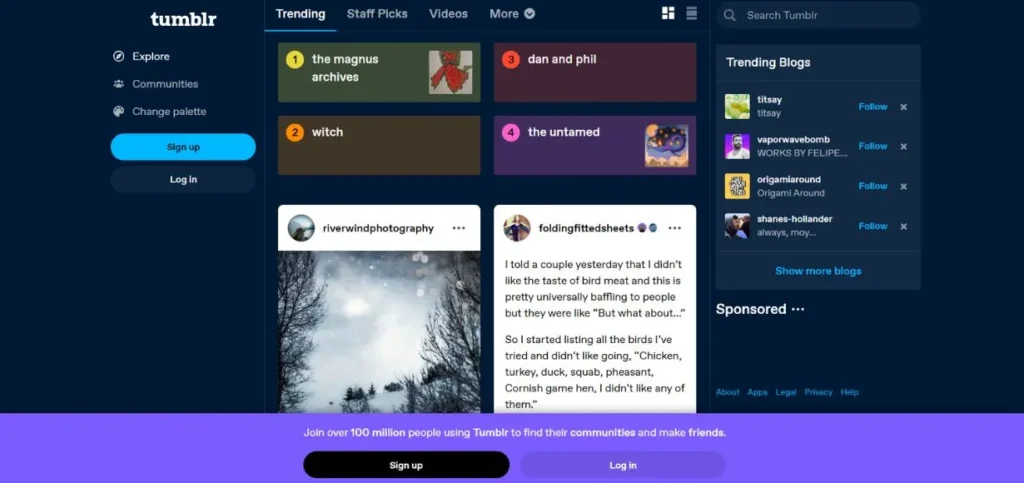
Tumblr focuses on visual-based microblogging (images, GIFs, short videos). The feed on the platform favours eye-catching images and is brief in text. Tumblr can be used effectively by content marketers of visual industries such as art, photography, and fashion to target younger audiences with creative interests.
The reblogging option incorporated in the platform allows the spread of viral content on the platform since users can share what they like. Tumblr has a culture founded on creativity and genuineness, rather than filtered content by the corporation. Tumblr offers an opportunity to form communities that focus on aesthetic-based content in the case of a company whose brand image is highly visual.
Key Features:
- Microblogging is a visual and short form.
- Viral content is facilitated through reblogging.
- Individual branding themes.
- The tag system helps in content discovery.
- Quick feed encourages eye-catching images.
Pros:
- All-in-one with a user-friendly interface.
- Good creative community in niches.
- Viral momentum is achieved through the reblog feature.
Cons:
- Reduced and diminishing user base.
- There are a few networking opportunities with the professionals.
- The algorithm places proper emphasis on the trending content alone.
Price: Free
8. Taboola
Rating: 4.0/5
Website: https://www.taboola.com/
Best for: Businesses
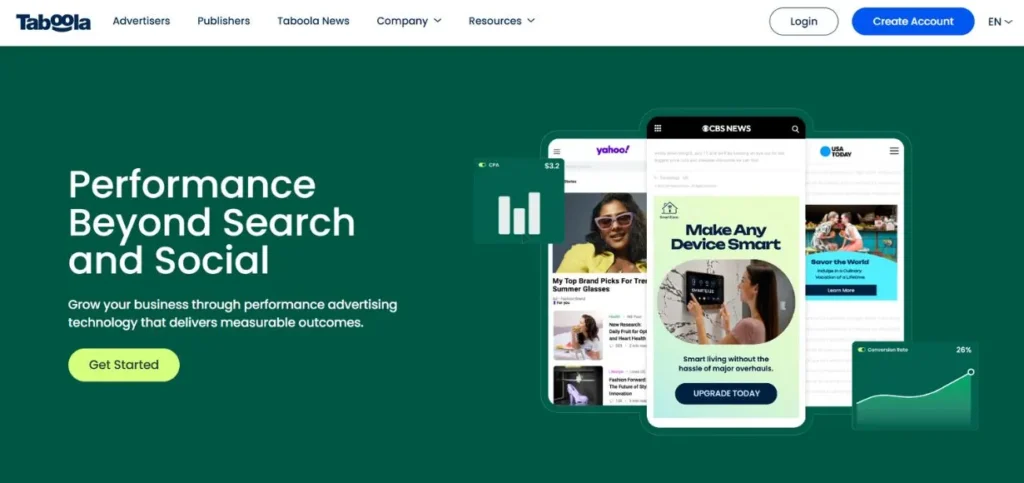
Taboola is a native advertising company that places your content as sponsored recommendations on popular websites. Taboola offers a wide range of exposure to businesses that are interested in increasing their traffic and conversions to their websites, with more than 1.4 million monthly visitors. The targeting feature of the platform makes sure that your contents reach the right audiences.
Similar to Outbrain, Taboola does not disrupt the flow, yet it engages in promotional content delivery through the editorial content. The channel is especially effective with content-oriented campaigns oriented toward lead generation or brand awareness. Companies like the use of the Taboola analytics and optimisation tools to maximise the performance of campaigns.
Key Features:
- Native advertisement on popular websites.
- 1.4 billion subscribers among publishers.
- Intense targeting of the relevant audiences.
- Campaign metrics are followed by detailed analytics.
- A/B testing optimises changes in content.
Pros:
- Extensive coverage with large publishers.
- The original format is mixed with information.
- Strong analytics allow maximisation of data.
Cons:
- Needs a huge investment in the advertising budget.
- Placement costs are increased because of competition.
- May requires expert campaign management.
Price: minimum budget typically starts at $500-$1,000/month
9. SlideShare
Rating: 4.0/5
Website: https://www.slideshare.net/
Best for: Businesses, educators, and experts
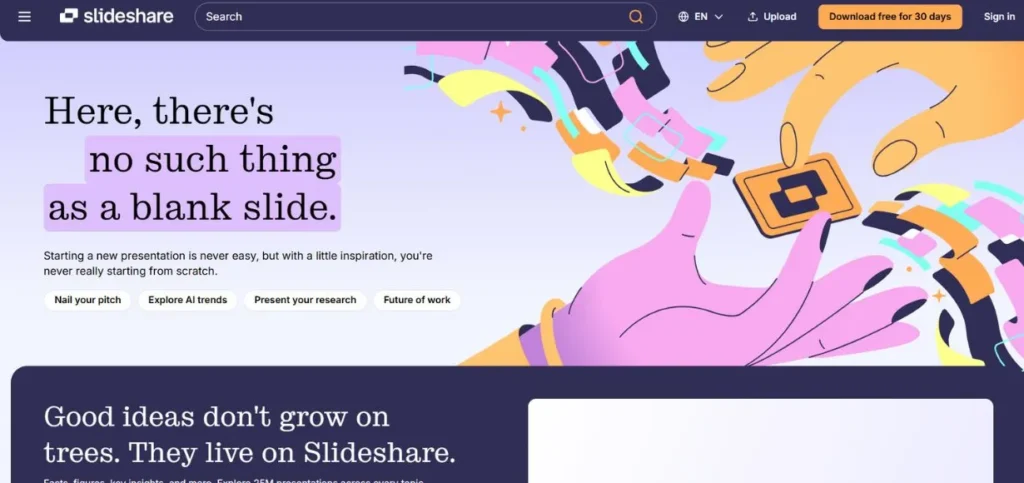
SlideShare transforms the concept of online presentation and document sharing by professionals. The platform allows PowerPoint presentations, PDFs, and Keynote files, and such can be viewed by people around the world. The content can be distributed effectively as the users have the opportunity to embed presentations in the websites or share the presentations in social media, or email them.
The analytics of SlideShare give creators an idea of the performance of their content to know how the audience is interacting with it. The site is priceless to teachers, advisors, and corporations who can exchange knowledge with the help of presentation templates. The content is not lost to oblivion once published, but continues to be found and generate value and traffic.
Key Features:
- Shares PowerPoint, PDF, and Keynote presentations
- Embed functionality integrates into websites
- Analytics track views and engagement
- SEO-friendly helps presentations rank well
- Social sharing extends reach significantly
Pros:
- Free platform for presentation content
- Strong SEO benefits for rankings
- Professional audience seeks educational content
Cons:
- Limited to presentation formats only
- Requires existing slide deck content
- Owned by Scribd with changes
Price: Free
10. Quuu Promote
Rating: 3.0/5
Website: https://www.quuupromote.co/
Best for: Businesses and individual content creators
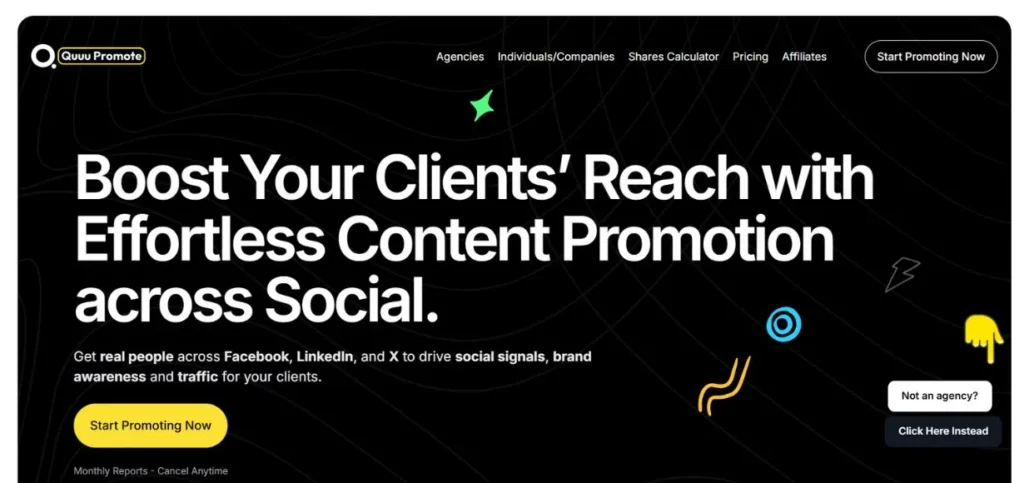
Quuu Promote adopts a different strategy whereby it automates the content sharing in your social media channels, such as Twitter and LinkedIn. Scheduling using AI is effective to make sure that the posts are published when the maximum number of people are interested. Lastly, it provides content curation options, which will assist you in sharing the relevant third-party content with the original one.
This would make you more reputable as a thought leader, as well as promote your own content. Automation helps companies and individual creators to save much time because they keep a regular social media account. Quuu Promote is an option that is recommended to people who would like to interact with various platforms but do not need to do it by hand.
Key Features:
- Artificial intelligence to schedule the high activity.
- Robotisation of various social networks.
- Relevant posts are proposed by content curation.
- Calendar visualisation lays down the plan of the content strategy.
- Performance analytics maximise the posting schedules.
Pros:
- Saves time with the automation feature.
- Has a stable social media presence.
- Positioning of thought leadership is created through curation.
Cons:
- It is not free; it requires a paid subscription.
- Restricted to social media applications only.
- Manual optimisation can be omitted by algorithms.
Price: Plans starting from $20/month
How to Choose the Right Syndication Platform
- Find Your Target Audience: Find the platforms your target customers spend time on and use on a regular basis.
- Take into account Content Format Compatibility: Select your type of content to be compatible with the platforms that can be used to present articles, videos, or presentations.
- Consider Budget and Resources: Separate free organic platforms and paid alternatives depending on the marketing budget consideration.
- Assess Platform Authority: The decision should be to make a priority of the existing platforms that have high domain authority to help gain the maximum benefit of SEO and credibility.
- Test Multiple Platforms: A trial of various platforms should be done to determine the best distribution channels before fully committing to them.
Best Practices for Content Syndication
- Stay Quality of Content: There is no need to sacrifice the quality of content to distribute it to more people; reputation is built on the consistency of quality at all times.
- Apply Canonical Tags: Canonical Tags should be used to prevent a penalty for duplicate content, and the value of SEO maintained correctly.
- Customise to Every Platform: Change headlines, descriptions, and formats to suit platform-specific audience and norms.
- Measure Actions: Track the performance of the engagement, traffic, and conversions in order to optimise the strategy and concentrate on the effective channels.
Conclusion
The content syndication platforms are a strong chance to enhance your message, target new audiences, and become an authority without huge marketing funds. With the correct choice of platforms and their objectives and targets, you can turn one piece of content into a multi-channel property that generates stable outcomes. Free platforms are a good place to begin testing and then expand to paid options after determining what is most effective for your brand and goals.
FAQs
Q: What is content syndication? What is its working process?
A: Syndication of content refers to the process of re-publishing your own original content on third-party platforms so that a larger audience can be reached. You retain the ownership and enjoy exposure using the already existing traffic and credibility of the established platforms.
Q: Is content syndication detrimental to SEO?
A: No, properly done with canonical tags indicating where your original work is, syndication can be a good SEO tool in the form of quality backlinking. Always check to make sure there is the right attribution of the content to eliminate the problem of duplication and maintain ranks.
Q: What is the cost of content syndication?
A: Costs vary widely. Such platforms as Medium, LinkedIn and Quora are free to be syndicated with, and such services as Outbrain and Taboola work on the principles of paid CPC. Select according to financial capability and the goals of the campaign.
Q: So, what is the most appropriate syndication platform in B2B marketing?
A: LinkedIn has the widest choice on B2B content syndication due to the professionalism of its users and the target audience of decision-makers. SlideShare and Quora can also be helpful in the sharing of expertise and thought leadership in the business-to-business sector.
Q: How do you measure content syndication success?
A: Monitor such track metrics as referral traffic, rate of engagements, number of leads generated, number of backlinks received, and conversions. The platform analytics and Google Analytics will help in monitoring channel performance and calculating ROI.
Continue Exploring: Top Backlink Analysis Tools for Smarter Link Building