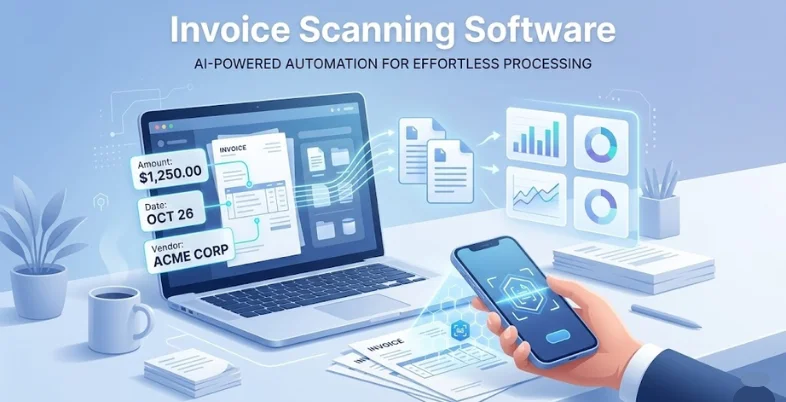


In the current digital healthcare environment, the process of communication between the provider and the patient is now more important than ever. The use of patient communication tools has transformed the way medical practices communicate with their patients, including scheduling appointments and following up with them after treatment. Such advanced sites are changing the way healthcare is delivered by providing a bridge between classic face-to-face communication and the new digital comfort.
With the growing pressure on healthcare organizations to enhance patient satisfaction in responding to administrative demands, patient communication tools have grown to be a necessity instead of an option. This is an excellent guide to the best solutions out there, which enables healthcare providers to make informed decisions regarding what platform best fits their practice requirements, be it a small clinic or a large integrated delivery system.
What Are Communication Tools?
Patient communication tools are specific software tools platforms meant to support effective and secure interaction between healthcare providers and their patients through various channels. The digital solutions are quite diverse in terms of functionality, such as appointment reminders, two-way messaging, telehealth, and automated patient engagement workflows. In contrast to generic communication programs, they are explicitly created to meet the requirements of healthcare standards, such as HIPAA, and ensure that confidential patient data is always safeguarded in all interactions.
New tools of communication with patients are now built into the current electronic health records (EHR) and practice management systems, and will form an ecosystem where data exchange between them is seamless. They facilitate multiple forms of communication, including SMS and email, patient portals, and voice calls, and healthcare organizations can reach their patients in the most comfortable medium of communication.
Why Patient Communication Tools Are Important
The healthcare sector has seen a radical change in the expectations of patients, as contemporary consumers seek the same amount of digital convenience they receive in other industries. The tools of patient communication are responding to this need by establishing effective, convenient means of communication that enrich the overall healthcare experience, at the same time lowering the administrative burden of medical practices.
- Better Patient Engagement: With the increased level of interaction, there are better health outcomes and patient satisfaction.
- Less No-Shows: Automated reminders greatly reduce the number of missed appointments and scheduled empty time.
- Operational Efficiency: An Efficient communication process saves personnel time on other needless activities.
- Improved Health Outcomes: Adherence to treatment and patient wellness will be enhanced by consistent follow-ups and education.
- Processes that are more accessible: There are various communication channels that guarantee that patients are able to connect, irrespective of their choice.
Pros of Patient Communication Tools
Although the decision to invest in patient communication infrastructure is still something that should be taken seriously, the advantages of the suggested change considerably outweigh the initial difficulties. These platforms provide quantifiable gains in various aspects of healthcare delivery, including patient satisfaction rates and practice revenue.
- Time Savings: Routine communications should be automated to allow healthcare staff to concentrate on the actual care of patients and on complex activities that can only be managed by human judgment.
- Cost Reduction: The actual result of reduced administrative overheads and the reduction in missed appointments is a direct increase in practice profitability and resource utilization within the organization.
- Patient Satisfaction: This is because of the convenient communication methods and prompt responses that make experiences positive, which in turn enhance loyalty and create a successful word of mouth referral to practices.
- Data Security: HIPAA-integrated tools safeguard sensitive data about the patients and, at the same time, ensure that the required communication happens and minimize the liability risks to avoid losing trust with the patients.
- Scalability: The modern platforms increase with your practice and can scale to higher patient volumes without corresponding administrative overheads and communication overheads.
Cons of Patient Communication Tools
Regardless of their multiple benefits, healthcare organizations should not overlook the possible negative effects of implementing tools for communicating with patients. Knowledge of these limitations can be used to set realistic expectations and create strategies that reduce the impact of the challenges in the adoption and continued use of the practice.
- Complexity of Implementation: Initial installation and integration with other existing systems may be time-intensive and may involve the allocation of specific resources, and may bring temporary workflow delays during the transition phases.
- Time to Learn: Employees might require a lot of training to be able to use the full platform features, and patients should be informed about the new means of communication and new work processes.
- Technology Dependence: Patients who do not use digital means of communication or cannot access the necessary technology to engage fully may become alienated by the overreliance on digital technology.
- Continued Costs: Subscription and maintenance fees continue over time and demand that practices consider the potential returns on investment versus other resource spending.
- Privacy Issues: Despite the measures that have been made to guarantee compliance, not all patients feel safe using digital health communication, and some patients require practices to retain alternative means and manage security-related fears.
Also Read:
Top 10 Patient Communication Tools
1. Artera
Website: https://artera.io/
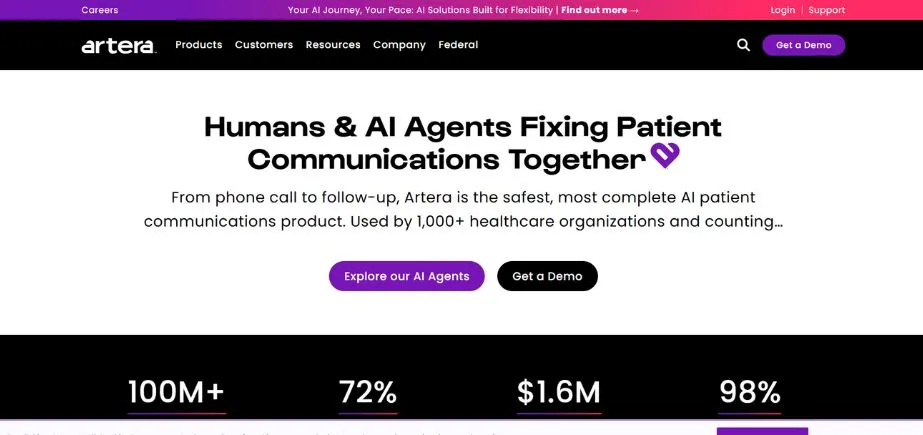
Artera is a universal patient communication platform that can be tailored to any kind of healthcare organization, either a medical group with a specific focus or a massive federal agency. The platform uses artificial intelligence to drive virtual agents that control front-desk functions and have personalized interactions with patients in a human-like fashion. This patient communication tool works brilliantly in computerizing the routine activities and still manages to retain the human touch which patients are drawn to.
The capability of Artera to accommodate vast numbers of interactions with the patients whilst maintaining high quality and consistent is healthcare providers. The platform is also multilingual, which additionally makes it particularly helpful in work with a diverse range of patients. Artera has strong integration functionality, which allows it to be easily integrated into existing EHR systems to keep patient data aligned across systems. The solution underpins specific patient engagement programs, where providers could create campaigns aimed at a specific population of patients or health condition.
Key Features:
- HIPAA-compliant two-way messaging
- AI-powered virtual agents
- Multilingual communication support
- Customizable branding elements
- Targeted engagement programs
Pros:
- Advanced AI capabilities
- Excellent multilingual support
- Highly customizable platform
Cons:
- Complex initial setup
- Higher learning curve
- Premium pricing structure
Pricing: Contact vendor for custom quote
2. Klara
Website: https://www.klara.com/
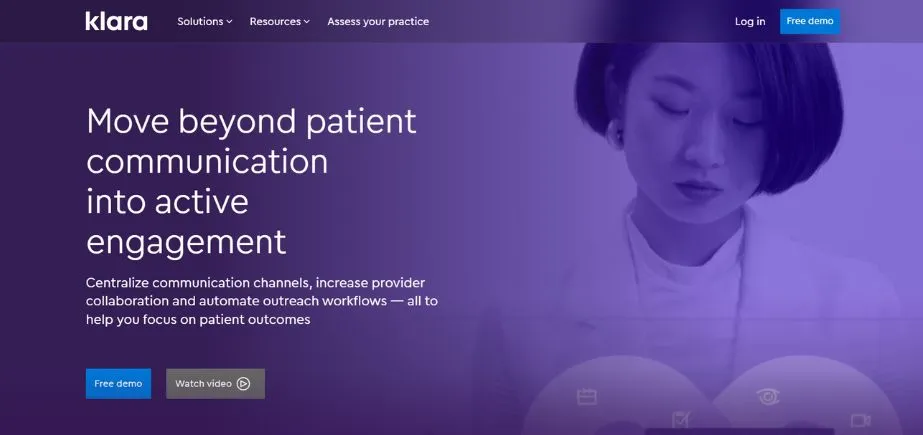
Klara has established itself as an interactive communication tool that brings about simplicity to the process of communication between patients and their providers. This patient communication tool will integrate various channels of communication into one, easy-to-use interface that can be easily navigated by the staff and patients. Klara will have a positive impact on healthcare practices as it decreases the administrative load and, at the same time, increases patient satisfaction scores.
The platform has the advantage of being user-friendly and therefore, staffs do not need much training to use it. Klara promotes telemedicine appointments, and it is a flexible method to use in practices where remote care is provided. The system enables providers to send electronic intake forms before appointments, thus making the check-in process simpler and minimizing waiting room congestion. Connection to other key EHRs makes sure that every communication with the patient is properly recorded and can be accessed in the current processes. There is a report of great time savings in the practices in dealing with routine patient inquiries and appointment management activities.
Key Features:
- Unified communication interface
- Pre-appointment form distribution
- Telemedicine integration
- Multi-channel messaging support
- EHR synchronization
Pros:
- Intuitive user interface
- Quick staff adoption
- Excellent telemedicine features
Cons:
- Limited customization options
- Fewer automation features
- Basic analytics capabilities
Pricing: Starting at $199 per provider per month
3. CERTIFY Health
Website: https://www.certifyhealth.com/
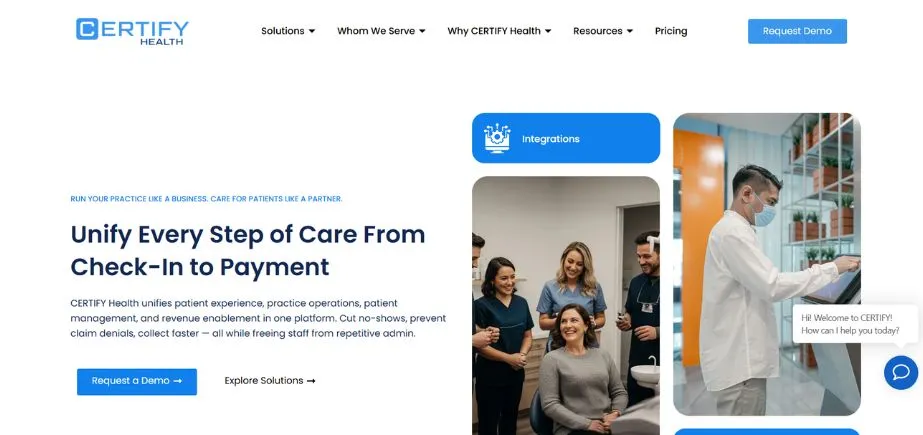
CERTIFY Health is a patient communication platform that is scalable to large and small practices, including both solo practitioners and large integrated delivery systems. The holistic nature of the platform takes into account the whole patient experience, including patient preparation before the visit and follow-ups on the post-care. Healthcare companies appreciate the vast amount of templates that CERTIFY Health provides and allow customized communication according to the type of appointment and patient preferences.
The broadcast messaging option comes in handy, especially in the delivery of regular updates to groups of patients. The omnichannel features of CERTIFY Health will make sure that patients get messages via the channels of their choice, be it email, SMS, or patient portal notification. The platform has a telehealth element, which promotes the increasing need for remote care services. Analytics tools assist practices with tracking campaign performance and finding ways to improve it. The ability to integrate with other existing EHR and practice management systems will help implement without interfering with the existing workflow.
Key Features:
- Customizable communication templates
- Omnichannel messaging capabilities
- Wait time notifications
- Campaign performance analytics
- Multilingual patient support
Pros:
- Highly scalable solution
- Comprehensive feature set
- Strong integration capabilities
Cons:
- Can feel overwhelming initially
- Requires configuration time
- Variable pricing complexity
Pricing: Custom pricing based on practice size
4. Luma Health
Website: https://www.lumahealth.io/
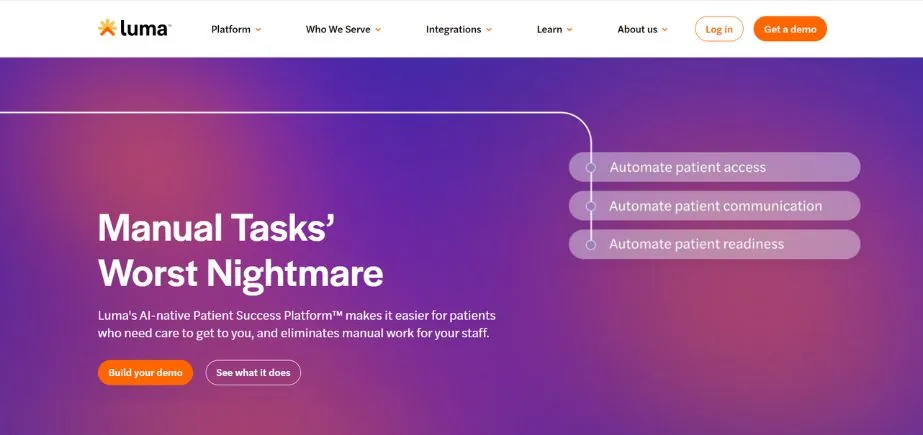
Luma Health offers full-cycle patient interaction with its highly advanced patient communication platform that streamlines each phase of the patient experience. The automation features of the platform deal with the initial outreach to continued care management, which greatly saves on manual work by practice staff. The difference between Luma Health and other providers is this unified communication history, which provides personnel with the whole picture of interactions with each patient. This holistic perspective can allow more individualized and informed reactions to the questions of patients.
The platform facilitates multilingual interaction, so that language barriers should not be the reason behind ineffective interaction with patients. This is possible through broadcast messaging, which enables practices to provide urgent updates, key messages, or mass reminders as needed. The implementation of Luma Health into EHR systems will comply with the seamless data synchronization operation, which will guarantee the correct records in the various platforms. The results of adopting the Luma Health automated reminder and follow-up systems have reported improved attendance of appointments and adherence to a care plan by healthcare organizations.
Key Features:
- Unified communication history
- Automated patient journey workflows
- Multi-language support
- Broadcast messaging capabilities
- EHR synchronization
Pros:
- Excellent automation features
- Comprehensive patient tracking
- Strong analytics dashboard
Cons:
- Steeper learning curve
- Higher cost for small practices
- Complex configuration requirements
Pricing: Contact for a quote based on patient volume
5. Carepatron
Website: https://www.carepatron.com/
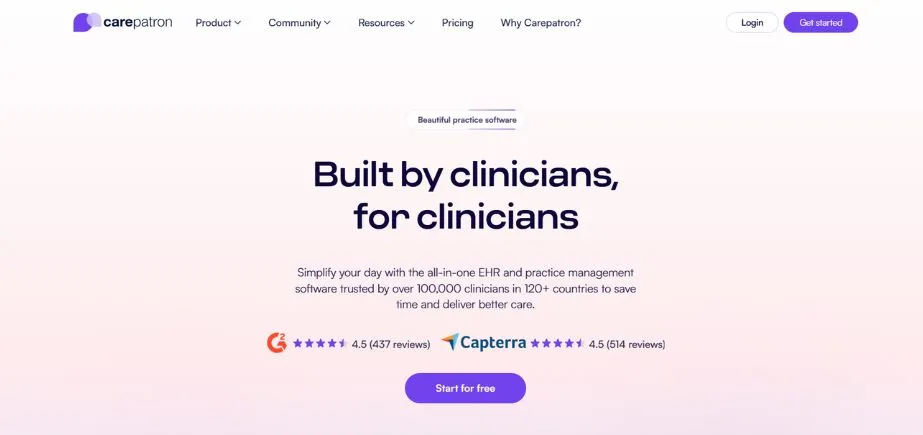
Carepatron is an app that is aimed at making the patient experience smoother and more efficient in terms of communication and scheduling. This is an online appointment booking, automated reminders by SMS and email, which makes this tool a significant reduction in no-show rates. The patient portal of the platform provides patients with easy access to their health records, billing, and history of communication. The first is security, where sensitive health information is safe through the use of HIPAA-compliant messages.
Carepatron is a company that is very successful in automating the process of patient intake using online forms, which they can fill in before their appointments. The system monitors critical metrics on patient communication, which can help the practices take action on the engagement patterns. Medical practitioners like the easy implementation process and user-friendly interface of Carepatron, which requires little training. Small to medium-sized practices that need a full-fledged communication platform without being overly complex find the platform very useful. Its low-cost pricing system allows it to be used by practices with tight budgets.
Key Features:
- Online scheduling system
- Automated reminder delivery
- Secure patient portal
- Digital intake forms
- Communication metrics tracking
Pros:
- Affordable pricing options
- Easy implementation process
- Excellent customer support
Cons:
- Limited enterprise features
- Basic integration options
- Fewer customization capabilities
Pricing: Free plan available; paid plans from $12 per user per month
6. Upfront Healthcare
Website: https://upfronthealthcare.com/
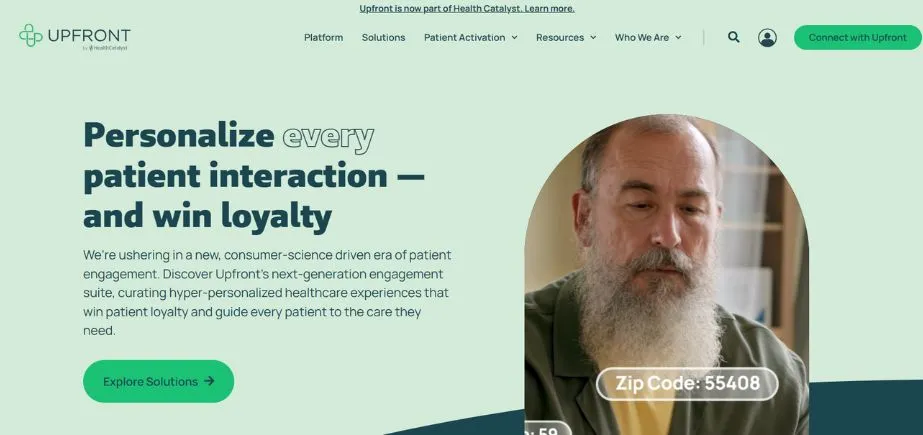
Upfront Healthcare is a data-driven patient engagement company that provides personalized care navigation on a large scale. This new tool of communicating with patients will utilize predictive analytics to define where care has fallen short, when, and what to communicate with the patient. The behaviorally intelligent messaging of the platform adjusts to the preferences and reactional patterns of a particular patient and enhances the engagement rates remarkably. Upfront Healthcare assists healthcare organizations in directing their patients to the right care by channeling outreach through targeted, omnichannel outreach by using text, email, and voice messages.
The system is also effective in enhancing attendance at appointments and compliance with care plans using strategic and personalized intervention. Tracking of real-time engagement gives instant access to the effectiveness of a campaign and patterns of patient response. Fluid EHR assures the up-to-date patient data across systems. Multilingual support enables practices to target a variety of patients. Upfront Healthcare is especially valuable to larger health systems that aim to adopt advanced measures of patient engagement backed up by advanced analytics and machine learning features.
Key Features:
- Predictive analytics engine
- Omnichannel personalized outreach
- Care gap identification
- Real-time engagement tracking
- Behaviorally intelligent messaging
Pros:
- Advanced analytics capabilities
- Excellent personalization features
- Strong predictive modeling
Cons:
- Best suited for larger organizations
- Higher implementation complexity
- Premium pricing tier
Pricing: Enterprise pricing; contact for details
7. OhMD
Website: https://www.ohmd.com/
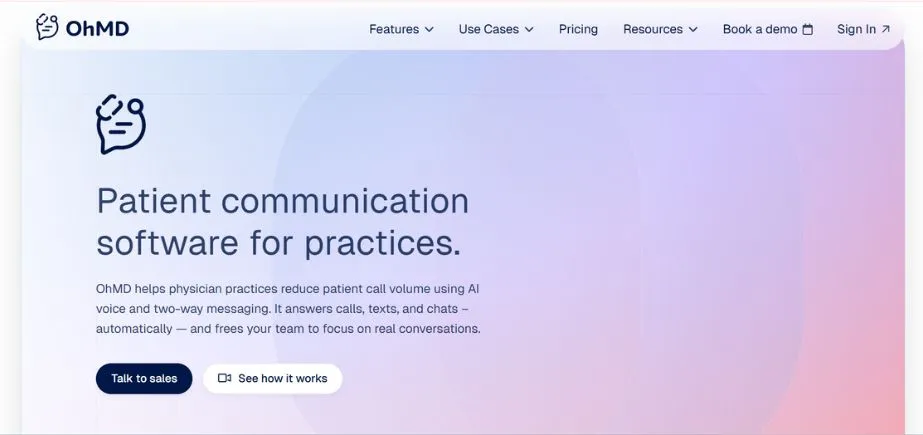
OhMD also makes it easier to communicate with patients by using the familiar SMS channel to which the patients already have access in their daily lives. This is a practical method of patient communication tools because it does not require that patients download specific applications, which would act as a barrier to interaction. The platform offers two-way texting that is HIPAA compliant and lets the provider and patients safely communicate. OhMD also automates regular communications such as prescription refill requests, appointment reminders, and frees up the staff’s time to work on more complex organizational tasks. Mass communications can be made with the help of broadcast messaging to announce or provide health tips or emergency updates.
Web chat facility facilitates instant communication with the patients via the practice website. Form, survey, and e-document transmission are also available through text messages, and healthcare providers can send them straight to their administration and simplify the process. OhMD can be integrated with other medical systems, which guarantees the seamless flow of data between systems. The simplicity of the platform has made it a great solution to practices aiming to find simple, effective communication methods with patients unable to communicate using the phone or those who need text-based communication.
Key Features:
- SMS-based communication platform
- Web chat functionality
- Automated routine requests
- Form and survey distribution
- Broadcast messaging system
Pros:
- No patient app required
- Simple user experience
- Quick implementation
Cons:
- Limited to text-based communication
- Fewer advanced features
- Basic analytics tools
Pricing: Starting at $99 per provider per month
8. Health Catalyst
Website: https://www.healthcatalyst.com
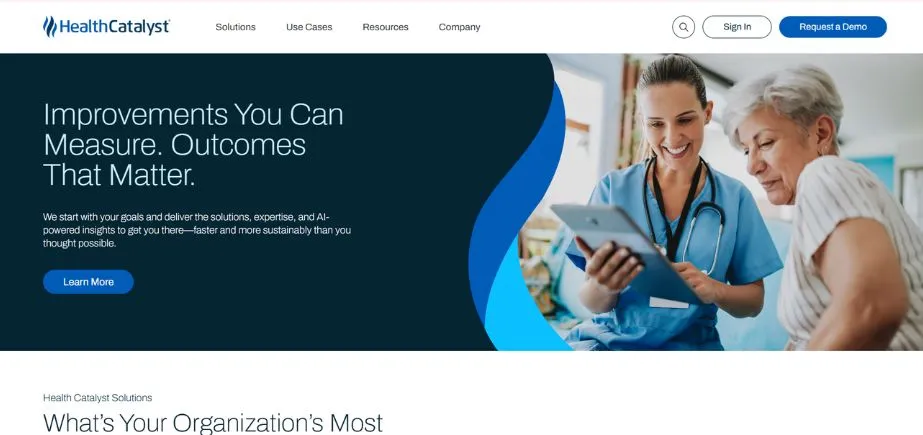
Health Catalyst is unique as it combines the strength of data analytics with the ability to communicate with patients, which is why it fits best with mid-sized healthcare organizations in need of insights on a deeper level. It is an advanced patient communication tool that allows organizations to make evidence-based decisions regarding patient engagement tactics when implementing multi-channel communication campaigns. The platform uses machine learning to create the content of messages and improve interaction with the patient using predictive algorithms. Health Catalyst is easily connected to EHRs, CRMs, and remote monitoring systems, forming a complete platform of patient data.
The alarm system signals the personnel about when the patients need attention, making them promptly respond to the emergency cases. The healthcare organizations appreciate the process that the platform will give them practical information about patient behavior and engagement patterns. The analytics functions assist practices in determining the communication strategies that are most effective for various patient groups. Health Catalyst is especially suitable for companies with established data analytics initiatives that want to improve their patient outreach initiatives by using comprehensive communication and insights.
Key Features:
- Multi-channel messaging platform
- AI-powered content generation
- Comprehensive system integration
- Staff alert notifications
- Advanced data analytics
Pros:
- Excellent analytics capabilities
- Strong AI features
- Comprehensive integration options
Cons:
- Complex platform requiring expertise
- Higher cost structure
- Longer implementation timeline
Pricing: Enterprise-level pricing; contact vendor
9. Solutionreach
Website: https://www.solutionreach.com/
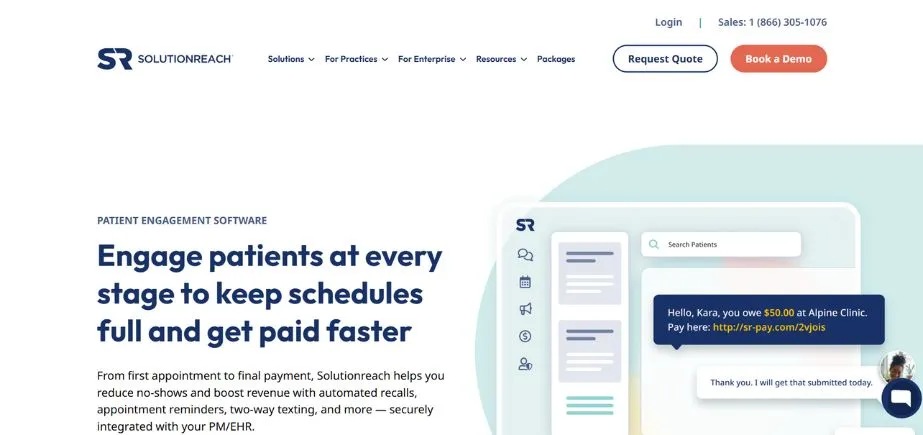
Solutionreach is a patient engagement platform that is flexible and applicable to different healthcare specialties such as dentistry, medical, and vision practices. It is a mature patient communication tool that aims at enhancing patient satisfaction and maximizing operational efficiency in all types of practices. The platform has automated reminders of appointments with text messages, email, and voice messages, thus minimizing the no-show rate. Online receipt and consent forms simplify the administrative work involved, which minimizes paperwork and waiting areas. Online scheduling features of Solutionreach enable patients to make appointments with ease of access and satisfaction.
Two way messaging allows continuity of care between appointments through constant communication between them. The features of patient feedback and survey collection allow practices to determine the areas of improvement and keep track of the trends of satisfaction. Communication that is HIPAA-compliant means that every interaction is regulated. The reputation management features of the platform assist the practices to track and address online reviews. Solutionreach especially is most appropriate as the optimal tools to use in nursing home patient communications within the pharmacy and other specialized care facilities where regular interactions with patients are essential.
Key Features:
- Automated multi-channel reminders
- Digital form management
- Online self-scheduling
- Patient feedback collection
- Reputation management tools
Pros:
- Proven track record
- Specialty-specific features
- Strong reputation tools
Cons:
- Interface feels dated
- Limited customization
- Higher pricing for small practices
Pricing: Custom pricing based on practice size and specialty
10. TigerConnect
Website: https://tigerconnect.com/
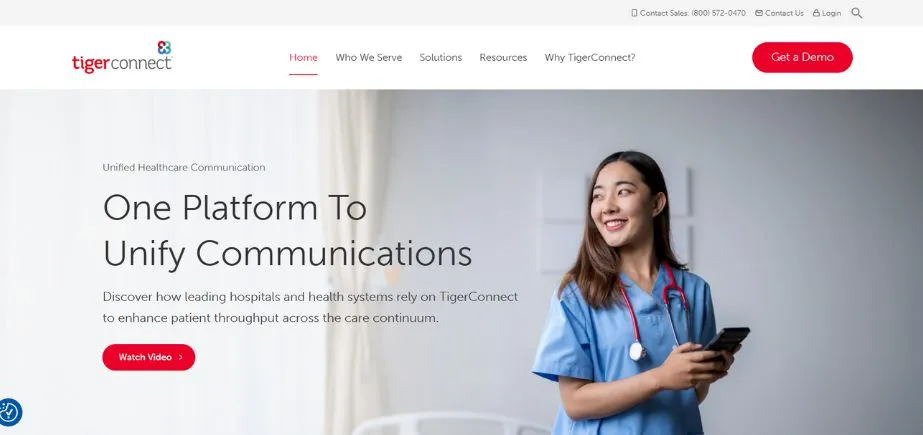
Completing our list of the best patient communication tools, TigerConnect adds unified communication to the healthcare provider. The platform brings together patient information and communication channels in one, easy to access place allowing staff to promptly and efficiently respond to patient needs. TigerConnect offers secure messaging that is HIPAA-compliant and ensures the integrity of sensitive patient information in each and every interaction. The telehealth and virtual consultation capabilities will assist in delivering care remotely, as it responds to the increasing patient needs to have options of convenient access. Automated reminders and follow-ups Scheduled messaging allows follow-ups and reminders without human intervention.
Two-way texting enables the continuation of the conversation between patients and providers, care coordination, and patient education. The communication in multiple languages will make sure that various groups of patients can be involved in practices. The unitary nature of the platform advances collaboration between care teams and elevates patient experiences with responsive and consistent contact. TigerConnect is suitable in small practices, as well as large healthcare systems that require an extensive offering of communication features. The care team coordination and patient engagement are the features of the platform that are especially appreciated by organizations.
Key Features:
- Unified communication platform
- Secure HIPAA-compliant messaging
- Telehealth capabilities
- Automated scheduled messaging
- Multi-language support
Pros:
- Strong care team features
- Excellent security measures
- Good telehealth integration
Cons:
- Can be expensive for small practices
- Complex feature set
- Requires training investment
Pricing: Contact for custom enterprise pricing
How to Choose the Right Patient Communication Tools
To choose the correct patient communication tools, it is important to consider your unique needs as a practice, demographics and operational limitations of the patient. The appropriate platform must support your organization objectives as well as be within your budget and technical limits. These are the key consideration factors that you should have in mind.
The Size and Type of Practice: Small practices might require less complex and less expensive solutions with the bare minimum functionality, whereas large healthcare systems need enterprise-level platforms with advanced analytics and scaling, as well as the ability to support the multiple-department and multi-location workflows with sophisticated capabilities.
- Integration Requirements: assess the level of integration between prospective platforms and your current EHR, practice management and billing systems to help guarantee smooth data flow and not create information silos or force them to enter the same data multiple times, which amplifies the potential errors and staff dissatisfaction.
- Patient Demographics: The features that are chosen should take into account the level of technological comfort of your patient population, their language, and their preference of communication channels. Those serving older generations may focus on voice and straightforward user interfaces, whereas those that are serving younger clients may focus on text and mobile-first interfaces.
- Budget Constraints: Compare detailed feature sets with affordable budget constraints through sum of cost of ownership calculations of implementation, training and ongoing subscription charges plus possible upgrade costs. It is a good idea to begin with core functionality and add features as ROI proves to be worthwhile and worth the investment.
- Compliance and Security: Make sure that any platform complies with HIPAA standards and industry security standards and has sufficient audit trails, encryption, and access controls. Check whether the vendor is committed to current security updates and their record with breaches or security incidents they responded to before investing in their solution.
Conclusion
The digital transformation in the healthcare sector has elevated patient communication tools to the status of mandatory infrastructure and no longer an optional addition to the current practices. These platforms provide quantifiable value in a variety of aspects, including better patient satisfaction and health outcomes, less administrative workload and increased operational efficiency. The ten solutions outlined in this guide are the most appropriate that are in place and each solution is specific in its strengths depending on types of practices that require it and its needs. You want high-level AI functionality, easy SMS-based interaction, or deep analytics-driven interaction, there is a patient communication tool that will suit your needs.
The trick is to think before choosing a platform by looking very carefully at what your practice needs, types of patients, and technical limitations. Change management and commitment will be required in the implementation, yet the long-term results of the investment will be worthwhile. With the ongoing changes in patient demands and the growing digitalization of the healthcare delivery process, the adoption of a strong patient communication tool will help your practice achieve long-term success in the ever-competitive healthcare market.
Frequently Asked Questions
Q1: What do you consider as key characteristics to consider in patient communication tools?
When considering patient communication tools to use in your healthcare practice, look for HIPAA-compliant messaging, automated messages, EHR integration, multi-channel communication features, and analytics.
Q2: How do communication tools with the patients enhance the attendance rates at the appointment?
Patient communication tools remind patients of appointments through SMS, email, and voice which has decreased no-shows by 20-30% as appointments are in the mind due to timely reminder messages and easy rescheduling features.
Q3: Are patient communication tools safe and HIPAA compliant?
HIPAA-compliant messaging, encrypted transmission of data, secure authentication, and detailed audit trails are reputable patient communication tools that are used to safeguard sensitive patient information during all interactions and storage.
Q4: Does small practice have the means to adopt patient communication tools?
Scalable pricing with entry-level plans available at less than $100 per month are offered by many patient communication tools, and serve a small practice context with high ROI in terms of efficiency improvements.