

The Indian food and restaurant business is transforming rapidly, and quick-service restaurants (QSRs) are quickly gaining popularity among customers and investors. As our lives are becoming busier and busier, urban populations are on the rise, and with the need to have an easy and healthier food choice with the same flavor, branded QSR chains are thriving in India. Subway is one of these companies that can be considered as a reliable global brand that has managed to adapt to Indian tastes and preferences.
Subway is quite a legend in terms of fresh sandwiches, customizable meals, and in terms of healthier positioning that is relative to traditional fast food. It has developed a good brand name over the years in India, particularly with the students, working population, and health-conscious population. This is a good opportunity, especially to aspiring entrepreneurs who may consider Subway as a franchise opportunity with fairly low risk as compared to launching an independent food enterprise.
Before investing in any franchise, there is a need to have a clear understanding of the costs involved, the potential profits, the business operational needs, and its sustainability in the long run. A lot of investors show interest in Subway and are normally not certain on how they are actually investing in it, returns, space requirements and even its eligibility requirements.
This blog will provide you with a concise and realistic idea of the subway franchise cost in India. You can find all the information on it, starting with the investment required and the expenses to be incurred to continuing with the profitability, advantages, and the challenges, which will assist you to make a sound business decision.
Why Invest in a Subway Franchise in India?
Subway is a company with a long history of operation in the world food industry. It began in 1965, in Bridgeport, Connecticut as Pete Super Submarines but changed to Subway in 1968. The brand has expanded to become one of the most successful quick-service restaurant chains in the world with over 36,000 restaurants operating in more than 100 countries. Subway is the second-largest QSR brand in the world today, only second to McDonald’s, and this is a statement that has a lot to say about the level of brand trust and scalability.
Subway had entered India in 2001 and had been steadily building on the 570 plus outlets in 68-plus cities. Due to increasing demands of fast, economical, and healthier food consumption, India remains one of the key growth markets of the brand. The Indian consumer tastes are well aligned with the Subway menu, which has vegetarian dishes, fresh food and customizable meals. Its versatile store formats and well-established brand name make it an attractive and relatively less risky franchise opportunity for businesspeople in both metro and upcoming Tier-2 and Tier-3 cities.
Why Choose a Subway Franchise in India?
Strong Global Brand Value: Subway is a well-known brand, and this aspect is beneficial as franchise owners may not spend much money on brand recognition and advertising.
Increased Demand for Healthy Fast Food: As awareness about health increases, the fresh and customizable nature of the menu in Subway suggests that the Indian consumers, irrespective of age, will find the new menu more appealing.
Proven Business Model: Subway is a time-proven and standardized franchise model, which makes operations less risky relative to opening a restaurant on its own.
Reduced Entry Barrier as compared to other QSRs: Franchise and setting up costs of Subway are relatively cheaper compared to several other global fast-food brands, and it is therefore more affordable to investors.
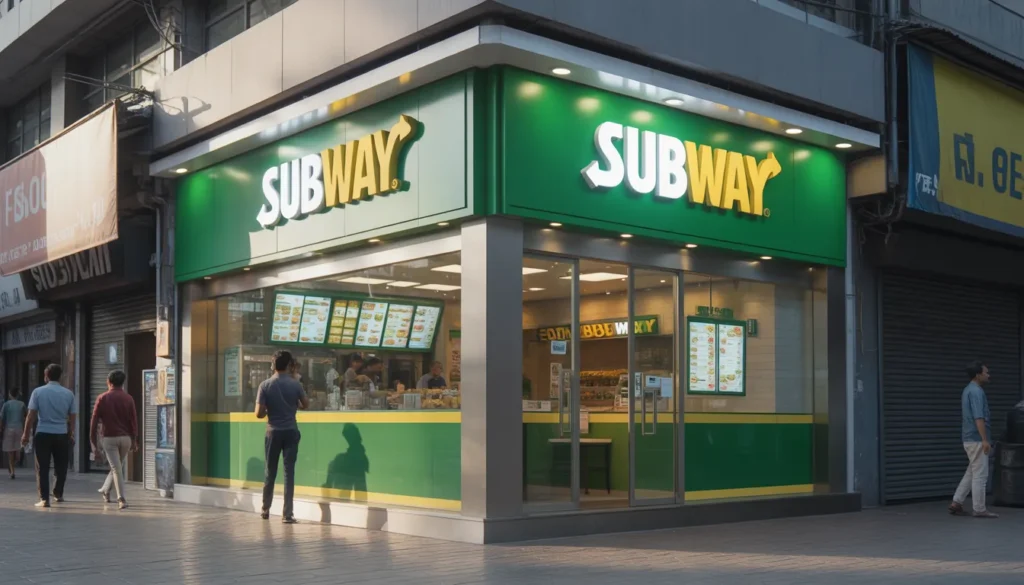
Flexible Store Formats: The franchise is able to work in food courts, malls, high streets, offices, and transit areas where the investors are free to choose depending on their budget and traffic.
Intensive Training & Support: Subway offers systematic training, working manuals and assistance to enable the franchisees to operate the outlet with smooth sails.
Wide Customer Appeal: The menu will target both vegetarians and non-vegetarians, students, the working population, families and customers who are fitness-conscious.
Growth and Multi- Unit Investment: The franchisees will be successful since this franchise can spread to several locations, which will take advantage of Subway’s expansion plans in the Tier-2 and Tier-3 cities in India.
Step-by-Step Process to Start a Subway Franchise in India
The entry into the Indian market with the Subway franchise is a well-organized and clearly articulated process that is tailored to assist entrepreneurs in establishing their Franchise with ease and success.
Each of them is explained in detail:
- Ask Franchise Brochure: The initial one is the request of the official Subway franchise brochure. This document will give a brief about the brand, franchise model, and requirements of investment as well as the simple eligibility criteria where you will be able to see whether the opportunity suits you or not.
- Send in the Franchise Application: Upon the completion of the review of the brochure, you will be required to complete and send the franchise application form in which you will provide your personal and financial as well as business information. This will assist Subway in determining how suitable you will be as a prospective franchisee.
- Introducing the Local Development Agent: After shortlisting, you would have a meeting with the local development agent of Subway. This discussion is based on investment capability, expectations in the business and the possible locations.
- Examine the Disclosure Document: There is a disclosure document, which is offered by Subway and which states the terms of the franchise, fees, responsibilities and legal conditions. It is important to consider this review prior to the progression.
- Secure Finances: At this point, you organize the capital amount needed to invest such as set-up expenses, equipment, interior, as well as working capital.
- Sign the Franchise Agreement: Once agreement has been made, the franchise contract is signed and you become an official Subway franchise partner.
- Attend the Training Program: Subway has an organized training program consisting of operations, food preparation, hygienic standards and staff management.
- Finalize Location: Under the guidance of Subway, you have to choose an appropriate location depending on the footfall, visibility and target customers.
- Build and Equip the Store: The outlet has been constructed based on the design requirements of Subway and all the necessary equipment has been installed.
- Launch the Outlet: Once last inspections are done, your Subway store is now launched and operational.
- Average time of set-up: 6-7 months between application and opening.
What Are Subway’s Expansion Plans in India?
- Aggressive Store Growth Target: Subway will continue to grow at a rate of almost 2,000 outlets within India by the next few years, with the aim of penetrating the market in the long-term.
- Focus on Tier-2 and Tier-3 Cities: Approximately 60 percent of new outlets will be located in the Tier 2 and 3 cities, where rental rates are lower and branded QSRs are gaining more demand.
- Increased Annual Addition of Outlets: Subway expects to capitalize on its expansion rate of 150-200 new stores annually, as compared to the last 3-5 years of expansion.
- Smaller & Smaller Store forms: To save setup and rental costs, new forms will include 170300 square foot food court outlets and compact high-street stores.
- Investment-Friendly Franchise Model: The growth is supported by franchising, and the average investment per unit is between 25-35 lakh, which is affordable to an individual investor.
- Enhancing Supply Chain Network: Subway is also increasing its vendor and logistics network to facilitate pan-India operations, which will maintain a consistent quality and supply on time.
- Tapping High-Footfall Micro Markets: The new stores will target malls, metro, IT parks, colleges, airports and hospitals so as to maximize the number of daily footfalls.
- Long-Term Market Share Goa: Subway would like to gain a bigger portion of the Indian expanding QSR market that is projected to grow at 8-12 percent/year due to urbanization and increased disposable income.
Can You Open a Subway Franchise in India?
Subway is in a full franchise business in India compared to Starbucks. Subway gives individual business people an opportunity to own and run a single or a few outlets under its globally recognized franchise system. In India, all the Subway stores are franchise-operated and assisted by the operations of the master franchise of the brand.
Subway had its entry in India in 2001 and has been providing consistent growth in the metro, Tier-2 and Tier-3 cities. Subway has established itself as one of the most easily accessible foreign food franchises with its more flexible store format, vegetarian-friendly menu, and relatively low investment requirement compared to other foreign QSR brands.
Day-to-day operations, personnel, and local marketing are overseen by the franchise owners, whereas the brands, training assistance, supply chain assistance, operational manuals, and marketing assistance on a national level are offered by Subway.
Explore more franchise options:
Subway Franchise Cost in India
| Expense Category | Details | Estimated Cost (INR) |
| Franchise Type | Individual / Multi-unit franchise | Applicable |
| Franchise Fee | Brand rights, training & systems | ₹6.5 lakh |
| Property Lease / Setup | Depends on city & outlet format | ₹6–10 lakh |
| Equipment & Machinery | Ovens, prep units, POS, refrigeration | ₹30–40 lakh |
| Interior & Branding | Subway-approved store design | ₹6–8 lakh |
| Initial Inventory | Raw materials & packaging | ₹1.2–1.7 lakh |
| Total Investment | Approximate overall cost | ₹25–35 lakh |
Investment may vary depending on location, footfall, store size, and rental costs.
Subway Profit Potential in India
Subway Profit & ROI Metrics
| Metric | Estimated Range / Value | Description |
| Annual Net Sales | ₹1.2 – ₹2.2 crores | Depends on location & footfall |
| Gross Profit Margin | 55% – 65% | Strong due to standardized pricing |
| Operating Profit Margin | 25% – 40% | After rent, staff & utilities |
| Break-even Period | 24 – 36 months | Faster in prime locations |
| Yearly ROI (Post Break-even) | 20% – 30% | Stable recurring income |
| Investment Recovery | 3 – 4 years | With good cost control |
| Annual Sales Growth | 8% – 12% | Driven by urban demand |
| Online & Delivery Share | 20% – 30% | Swiggy, Zomato, in-app orders |
How to Start a Subway Franchise in India
1. Go to the Franchise Portal:
It starts with the process of contacting Subway using their official franchise enquiry portal or franchise consultants, who are the representatives of the brand.
This step ensures:
- Your application has been received by the right regional development authority.
- You get real and current information on the franchise.
- You do not deal with unscrupulous agents or false intermediaries.
- It is at this level that you just show an interest but not a financial one.
2. Make the Franchise Application:
After you establish contact, you will be requested to fill out a franchise application. This is an important analysis phase.
You will need to provide:
- Professional and personal experience.
- Liquid capital (net worth, financial strength)
- Preferred city, area or specific location (assuming identified)
- Food, retail, or operations experience of business.
This is what Subway takes into consideration in order to determine whether you have the financial and operational capacity to operate a franchise.
3. Meeting with a Development Agent:
The regional development agent or franchise manager of Subway then sets up a meeting following an examination of your application (online or face-to-face).
This discussion focuses on:
- Your capital and financial preparedness.
- Food service operations knowledge.
- Anticipated schedules and expansion strategies.
- Fit to the Subway business model and brand values.
It is a two-sided analysis, Subway analyses you and you analyze the business opportunity.
4. Franchise Disclosure Review and Agreement:
When you pass the first background check, Subway provides the Franchise Disclosure Document (FDD) and the Franchise Agreement.
You will be required to pay special attention to:
- Start-up franchise fee and establishment cost.
- Royalty payments and marketing donations.
- Term of contract and renewal terms.
- Standards and compliance requirements operations.
- Exited conditions and transfer conditions.
Legal and financial advisors should go through these documents and only sign them when they are sure.
5. Finalization and Site Approval Location Finalization
The location is a very important factor in the success of Subway. You either suggest a location, or Subway helps you with searching one.
Site evaluation is based on:
- Visibility and accessibility: The low-cost airline must be visible across every part of the country and accessible to all. The cheap airline should be seen in all corners of the nation and be available to all.
- Foot traffic (foot offices, malls, hospitals and campus) daily.
- Some demographic (working professionals, students, families) benefits.
- Store size and layout viability: There should be no signing of the lease before the location is formally approved by Subway.
6. Training and Store Setup
After signing the agreement and getting the location, you get into the training and setup phase.
This includes:
- Compulsory education to the franchisee and the key personnel.
- Training on operational matters, such as food safety, inventory, customer service and POS systems.
- Construction of the stores according to the international designing guidelines of Subway.
- Toshiba equipment, installation of signage, IT installation.
Subway pays close attention to this stage so that the brand can be consistent.
7. Initial and Continuing Operations:
Subway does final inspections to make sure that all standards are upheld before opening.
The idea of post-launch support involves:
- Work-level direction within first months.
- Promotional and marketing assistance.
- Quality audit and compliance checks.
- Continued supply chain and vendor management.
After the approval the outlet becomes operational and the official kickoff takes place within the framework of the standardized quality and service under Subway.
Best places to open a Subway franchise in India.
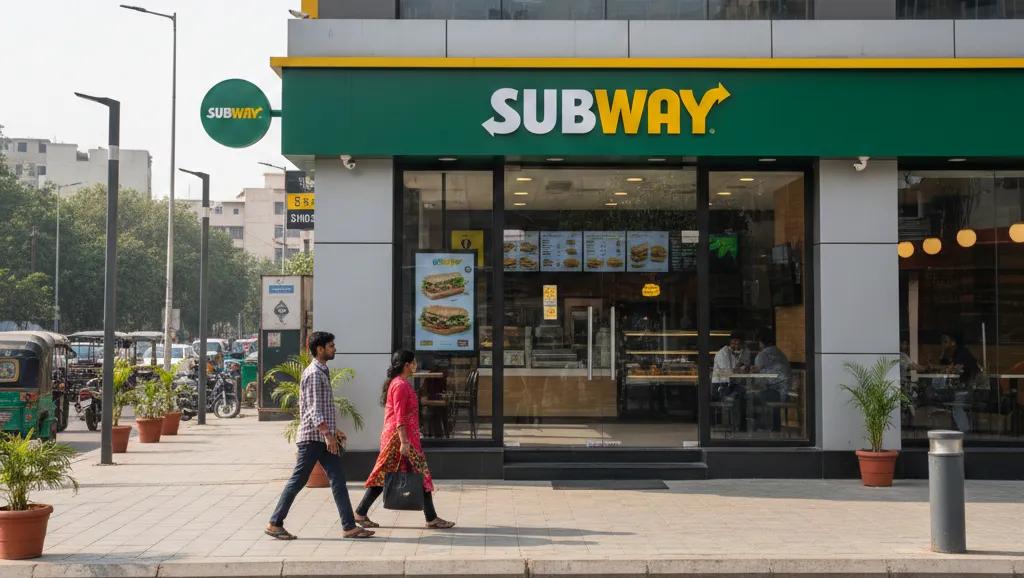
Subway does best in high footfall convenience-based places, including:
- The food courts and shopping malls.
- IT parks and corporate hubs
- Colleges and universities
- Hospitals and transit hubs
- High-street retail areas
- Metro stations and airports
Food court restaurants take a smaller area and pay less rent which is why they are popular amongst first time investors.
Franchise Documents to Start a Subway Franchise
In order to run a Subway franchise, the franchisees usually require:
- PAN Card & Aadhaar
- GST Registration
- FSSAI License
- Shop and establishments certificate.
- Trade License
- Bank Statements
- Property Lease Contract / Ownership Certificate.
Challenge to operate a Subway Franchise in India
- Middle-range Start-up: Even though Subway is a cheaper brand as compared to Starbucks or McDonald, a 2535 lakh investment will need appropriate financial planning.
- High Rentals in Metro Cities: Good spots within malls or business areas have the potential of influencing profitability in the event that rent is not negotiated effectively.
- Strict Brand Guidelines: Subway is not a place that can be customized as it is based on international standards of food quality, hygiene and store design.
- Intense QSR Competition: Subway is competing with McDonalds, Burger King, KFC, Domino and local cafe brands on who takes care of the customers.
- Discipline Operationally Necessary: The ability to be consistent in service, quality of ingredients, and training of the staff is instrumental towards keeping the brand trusted.
- Switching Consumer Tastes: Consecutive menu innovations and promotional programs are required to keep the repeat customers.
Training & Support Provided by Subway India
Subway provides well-organized training courses to make franchisees and employees strive towards quality and operational excellence in every outlet.
First Franchise Training Program.
The training of the franchise owners and key managers is thorough and includes food preparation, hygiene requirements, customer services, stock management and store operation.
Sandwich Artist Training
Employees are also taught the skills of a Sandwich Artist and this includes how to prepare sandwiches in a standardized way, how to handle the various ingredients and how to control the amount of food to be given to customers.
Operations and Compliance Training.
This training is on food safety, hygiene procedures, garbage management and adherence to the global operation requirements set by Subway.
Store Manager Development
To maintain a smooth operation in the stores, managers are trained on how to manage their team, schedule shifts, manage cost, track sales and efficiency of operation.
Marketing and Promotions Advice.
Subway offers local promotions, seasonal offers and online ordering systems, and in-store marketing services to aid in raising the amount of footfall and sales.
Ongoing Support & Audits
Quality audit is carried out regularly, refresher training and operational updates are done to ensure the brand’s performance and standards.
Benefits of owning a Subway Franchise in India
Global Brand Recognition: Having a solid brand and having gained customer trust means that Subway does not have to work hard to build its brand at the local level.
Health-Conscious Menu Benefit: The use of fresh ingredients, vegetarian and customizable meals are all in line with the current Indian consumer tastes.
Middle-level Investment in Comparison to Other QSRs: Subway does not demand so much capital as high-quality cafes or big-box fast-food chains.
Flexible Store Formats: Franchisees have options on what to do depending on the budget and location; they can opt to have food court, high street outlets and also compact stores.
Vigorous Training and Operational Backing: The standardized systems of the subway allow the franchisee to be quality and efficient even at the entry level.
Increasing demand in the booming cities: The possibility of expansion into Tier-2 and Tier-3 cities will have long-term growth potential and reduced rental expenses, as well as growing brand demand.
Conclusion
An investment in a Subway franchise is a good opportunity to seek both growth and stability for the entrepreneur. Globally recognized, having a customizable and health-conscious menu, and attracting a great appeal amongst students, professionals, and families alike, Subway provides a proven model for doing business in India with structured training and operational support. Knowing the Subway franchise Cost, which generally falls in the range of ₹25–35 lakh, depending on location and store format, helps prospective franchisees to plan their investment and profitability anticipation.
A successful and sustainable venture can be built by carefully choosing locations with high footfall, controlling operational expenses, and making judicious use of Subway’s marketing and supply chain support. A Subway franchise is indeed an exciting business opportunity that promises worthwhile returns to every franchisee who sticks to maintaining brand standards and actively manages his or her outlets in India’s fast-growing QSR market.
FAQs
How Much Do You Need To Invest To Open A Subway Outlet In India?
The cost of the total investment is in the range of 25-35 lakh, depending on the location and type of store.
Breakeven In A Subway Franchise: How Long Does It Take?
The majority of Subway stores can break-even in 24-36 months under proper management.
Does Subway Train Franchise Owners And Employees?
Subway provides franchisees and employees with structured training and continuous operational assistance.
Can The Subway Project Successfully Enter Tier-2 And Tier-3 In India?
Subway has a flexible store format and is expanding in brand demand, which makes it fitting to the smaller cities too.