
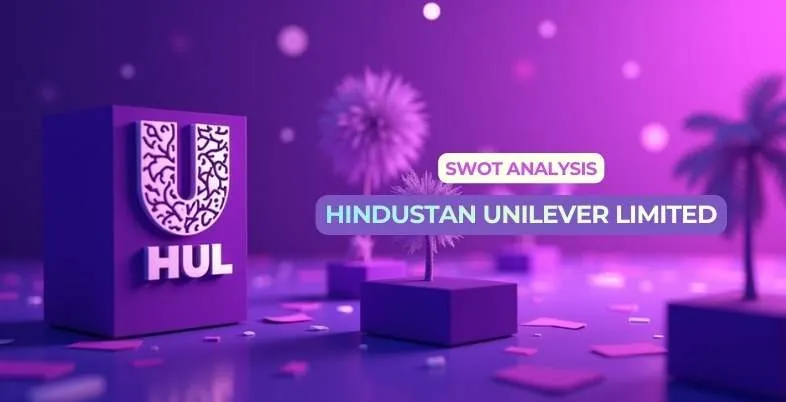
Hindustan Unilever Limited (HUL) is one of India’s oldest FMCG companies. With a legacy spanning over 90 years and a portfolio of 50+ brands across 15 major categories, HUL touches the everyday lives of consumers from metropolitan cities to remote towns. In FY 2025, the company recorded annual revenues of around ₹60,680 crore and maintained solid profitability with an EBITDA margin of 23.5% and profit after tax of over ₹10,600 crore.
In this blog, we break down SWOT Analysis of Hindustan Unilever Limited- Strengths, Weaknesses, Opportunities, and Threats (SWOT) — using the latest performance metrics and market dynamics — to provide a clear, expert understanding of where the company stands in 2026 and how it is positioned for the future.
What is SWOT Analysis?
SWOT Analysis is a strategic planning model, which analyzes the competitive position of an organization based on four four-spot dimensions: Strengths (internal benefits and strengths), Weaknesses (internal weaknesses and drawbacks), Opportunities (external positive factors that might support the growth), and Threats (external challenges and risks). This analytical tool assists the firms in understanding their competencies, correcting deficiencies, exploiting opportunities, and formulating defensive measures to the competition pressures, which eventually shape the strategic decision making and resource allocation.
Overview of Hindustan Unilever Limited

Hindustan Unilever Limited (HUL) is the largest and most reputable company in India which deals with fast moving consumer goods, and is a subsidiary of the global multi-national company Unilever. The history of the company started in 1933 when the Lever Brothers India Limited was founded, and in 1956, it fused with Hindustan Vanaspati Manufacturing Company to become Hindustan Lever Limited and in 2007 changed to Hindustan Unilever Limited. HUL has a staggering market capitalization of 5.37 trillion by 2025, annual revenues of over 64,000 crore and net profits of about 10,926 crore. The company has a strong distribution network that makes it reach a total of more than 9 million retail outlets both in urban and rural India along with its strong consumer insights and reputed brand portfolio, which is its unique selling proposition.
Known For:
- Luxury home and personal care products.
- Rural market penetration with Project Shakti.
- Sustainability business practices and CSR programs.
Market Position (2025):
- Market Cap: 5.37 trillion ( 67 billion)
- 2025 Revenue: ₹60,680 crore
- 2024 Revenue: ₹618.9 billion
- 2023 Revenue: ₹605 billion
- Q2 FY2025-26 Profit: ₹2,685 crore
SWOT Analysis of Hindustan Unilever Limited: Step By Step
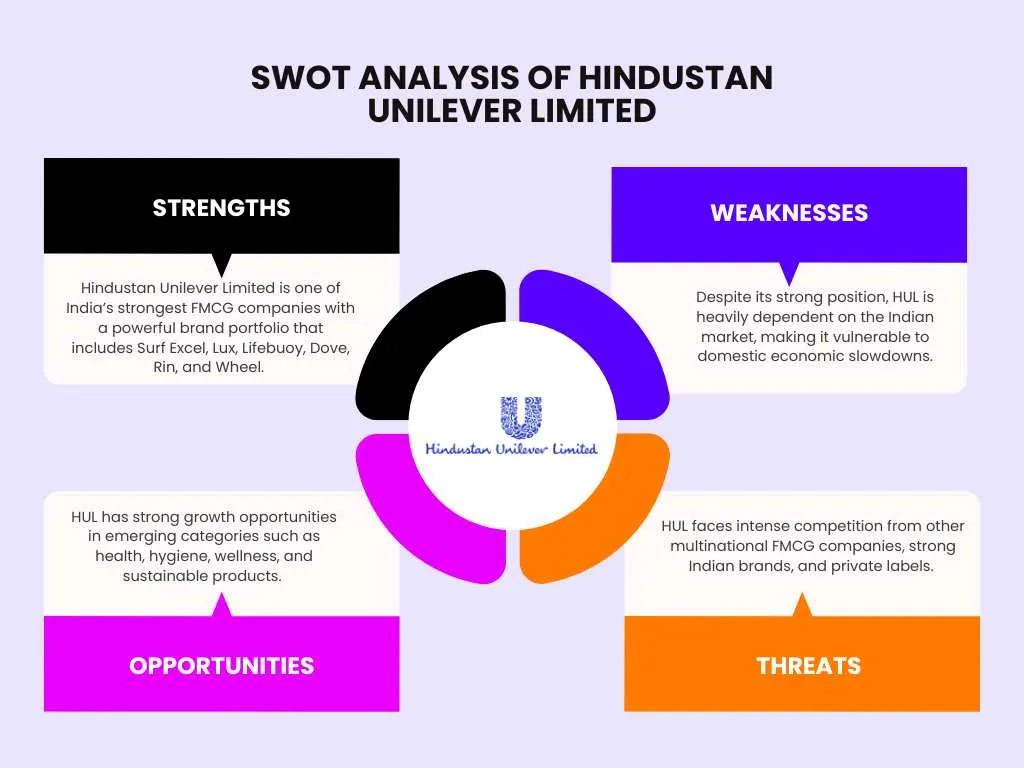
Strengths of Hindustan Unilever Limited
- Strong brand Portfolio with strong consumer loyalty HUL holds 50+ iconic brands across 16 FMCGs such as Lux, bestsellers Dove, Surf Excel.
- Unparalleled Distribution Network Across India. The Company comprises 9 million retail stores in urban metros and remote villages.
- Good Financial Statement and Profitability Journey. Good growth, good margin, and debt-free condition with a dividend payout ratio of 101%.
- Innovation and Research and Development capabilities The advanced research centers in Bangalore leverage the innovation of products and consumer solutions across the country.
- Parent Company Support and Worldwide Experience The 61.9% ownership of Unilever gives it access to the best practices, technology and resources in the world.
Weaknesses of HUL Company
- High Reliance on the Indian Market Generates most revenue in India, reducing geographic diversification and posing a risk of market concentration.
- Slow Sales Growth in Recent Years. The Company recorded a poor sales growth of 9.67 percent over the last five years, as compared to its competitors.
- Premium Pricing Strategy Controls Mass Market Infiltration. Higher costs than local competitors constrain market penetration in price-sensitive stores.
- Previous Scandals that have impacted the brand reputation, Kodaikanal mercury pollution and Fair and Lovely scandals, have tarnished the corporate image to a considerable extent.
- Complex Product Portfolio Management is challenging 50+ brands in many categories need a lot of resources and dedicated marketing work.
Opportunities for Hindustan Unilever Limited
- Growing Rural Income: Growing purchasing power in rural India presents unexploited opportunities for FMCG consumption.
- The rise of Digital Commerce and E-commerce Development: the channels of distribution and consumer engagement created by the rapid adoption of online shopping present new opportunities. Expansion in digital and e-commerce channels (including quick commerce like Blinkit and Zepto, which are growing rapidly) offers new ways to reach consumers beyond traditional retail.
- Demand Health and Wellness Products Post-pandemic consumers are focusing on hygiene, immunity, and wellness products due to the expansion of this category.
- Eco-friendly and Sustainable Product Lines. Environmental awareness allows high-end placement of sustainable, green, and organic products.
- Strategic Acquisitions and Brand Extensions. Opportunities to purchase new D2C brands and enter related categories such as nutraceuticals.
Threats to HUL
- Extensive Local and Regional Competition Forceful pricing by Patanjali, Dabur, and local brands in the region eat away at the categories.
- Raw Material Price Volatility and Inflation Varying prices of palm oil, crude derivatives tend to affect margins and profitability greatly.
- Evolving Consumer Preferences for Natural Products: Consumers’ shift to Ayurvedic and chemical-free products also threatens the formulations and positioning of synthetic products.
- Regulatory Changes and Compliance Requirements Changes in GST, labeling legislation and environmental regulation make operations more complex and expensive.
- Economic Downturns The slowdown in the economy causes a slowdown in consumer expenditure on high-end products of the FMCG sector throughout the country.
HUL Business Strategy
Premiumization and Portfolio Upgrade Focus on premium product segments and brands in order to enhance margins and brand perception. They supply over 9 million retail outlets, from big supermarkets to small neighborhood shops. Over 1.4 million retailers are connected digitally, so orders are fast and accurate. They’re growing premium skincare and personal care lines. Acquisitions like Minimalist show their push into clean, modern products.
Digitalization and E-commerce Growth Investing heavily in digital marketing, e-commerce alliances, and direct-to-consumer channels around the country. Available on Amazon, BigBasket, Blinkit, Tata Cliq, and more. Their sales teams use digital tools to track orders and manage stock efficiently.
Rural Market Access Project Shakti Women entrepreneurs in rural India Empower rural women as distributors to penetrate into underserved villages in India. HUL sells smaller, affordable packs for rural areas. They work with local retail networks to reach deeper markets.
Sustainability and Responsible Business Practices Dedicated to attaining zero waste, lessening carbon footprint, and ethical sourcing projects.
Product Development and Formats Continuous Research and Development in new formulations, packaging concepts, and product launches that are consumer-focused. They have 15+ categories, like personal care, home care, foods, and drinks. Brands like Dove, Lux, Surf Excel, and Glow & Lovely are household names.
Conclusion
The SWOT Analysis of Hindustan Unilever Limited reveals that HUL is the FMCG market leader in India; it has a strong network of brands, distribution and the parent company experience to ensure that it remains the market leader. Given the competitive rivalry in local markets and shifting consumer tastes toward natural products, the ongoing strategic emphasis on premiumization, digitalization, ruralization, and sustainability will help HUL succeed in the future. High financial results, a great level of innovation and an adherence to the principles of responsible business make the company one of the first ones everyone would choose to collaborate with, preserving its heritage of being the most reliable FMCG giant in India.
Frequently Asked Questions (FAQs)
How is Hindustan Unilever capitalized in the market in 2025?
Hindustan Unilever Limited is a trillion (circa 67 billion dollars) Indian company dealing in FMCGs, and has a market capitalization of about ₹5.37 trillion as of 2025.
What is the number of brands that Hindustan Unilever owns and the most popular?
HUL also has more than 50 brands across 16 FMCG segments, of which 19 generate annual revenue exceeding 1000 crore, including Surf Excel, Lux, Dove, Lifebuoy, and Rin.
Why is Hindustan Unilever unique among its rivals in the FMCG industry?
The distinctive strengths are the HUL unmatched distribution network which serves 9 million outlets, 90 years of experience in India, global expertise of its parent company Unilever, and its continuing ability to innovate.
What are the key issues encountering Hindustan Unilever in the prevailing market environment?
A comprehensive SWOT Analysis of Hindustan Unilever Limited shows that the local brands of the HUL, such as Patanjali, stiff competition, evolving consumer behavior towards natural products, unstable prices of raw materials, low sales growth rates, and its complicated portfolio are the challenges that HUL copes with.